Showing posts with label Transition Skills. Show all posts

Monday, January 6, 2020

Ten Tips for Advocacy & Self Love to Carry With You Over the Next Ten Years

“Ten Tips for Advocacy and Self Love To Carry With You Over the Next Ten Years”
Hi everyone! I hope you all had a wonderful holiday surrounded by your family and friends! I know I did! As we approach the end and beginning of a decade, I’ve been thinking a lot about how I’ve grown over the last ten years. And man, have I CHANGED. In 2009-2010 I was in my sophomore year of high school. I was experiencing a lot of challenges with my condition, not just visually, but in every aspect. I was working really hard to navigate my peer relationships, do well in school, balance my life... plus manage my ever fluctuating SOD (septo-optic dysplasia). I’ve written before about the challenges I faced during my teenage years and how that time often felt like it was never going to end...

 BUT IT DID!!! There were still hard moments over the years but since then I have accomplished a lot! I successfully graduated both high school and college within the normal time frame. I have traveled to and spent time living in twelve different states (some more than once), one foreign country, and one tropical island. I worked on over fifty productions both on and off the stage. I got my first white cane and pair of glasses. I danced on the stage at Radio City Music Hall. I climbed three different literal mountains and more figurative mountains than i can name. I got my first professional teaching job. I learned to be independent AND interdependent. I fell in love. And the list keeps going! 

But this is life. It isn’t all sunshine and happiness all of the time. And I would be lying if I said that for all the joy, succsss, and adventure this decade brought me- it’s kind of come full circle. I started the decade in a rough spot and I’m ending it that way too.

But I’m hopeful that just like the past ten years, the next ten will bring so many wonderful opportunities. And as i reflect on the past decade and prepare for the new, I have Ten Tips to share with you to hopefully inspire you to live your best life, advocate for your success, and love yourself a little more in the years ahead! (They are a little long so bare with me!)

  1. Every part of you is something to celebrate. It can be tempting sometimes to try and “hide” your vision impairment. But why?? Everyone has something going on in their life or something about them that makes them unique or special. And yours just happens to be your vision! Embrace it! Once you accept yourself and celebrate all the elements that make you who you are, it will be hard for others not to follow suit!
  2. You are your own worst enemy-not sighted people. It’s easy to feel like because sighted people don’t always understand you that they are against you. This is SO NOT TRUE. Most sighted people just don’t get it initially. But once you explain you’re vision, there is so much opportunity to create a dynamic relationship! Thinking that because they may not understand means they can’t or don’t want to understand you will only do you a disservice. You could miss out on incredible connections, friendships, and opportunities. Don’t let your own insecurities and anxieties about how they may view you get in your way. Which brings me to my next point....
  3. Stop worrying so much! Life is way too short to let anxiety and insecurity rule your daily life. You are so capable and deserve to have every possible experience life has to offer. The only one holding you back from taking those chances and leaps of faith is you! I know it can be scary and anxiety inducing thinking about all of the potential “no”s you will hear or the ones you’ve already heard. But don’t let those rule your world. Find every opportunity to take that “No”and turn it into a “YES”!
  4. It’s okay to not be okay. Sometimes though, despite our best efforts, there are some things we just cannot do. And it’s okay to feel that. It’s okay to be sad about that. Sometimes things happen that are genuinely really awful. The only way to truly move forward is to let yourself feel those sad and bad feelings. Eventually you will grow through it. Eventually you will be able to use that as fuel to persevere. But in the meantime, if you are having trouble moving on.... have a good cry. Eat that pint of Ben and Jerry’s. Call your best friend and vent about it. Allow yourself that time to process so that you can come back stronger than ever.
  5. It’s okay to let go. Sometimes things in our life no longer serve us anymore, or no longer fit in with our plan. Whether it’s moving on from a place, or saying goodbye to a friendship; sometimes holding on to tightly can only do more damage. It’s okay to let go of the things that don’t support you anymore. People grow, circumstances change. And there is nothing wrong with that. Allow yourself the freedom to move forward and maybe leave some things behind.
  6. Asking for help isn’t a bad thing. You are strong. You are capable. You can do anything. But we don’t always feel that way. And in those moments it’s more than acceptable to ask for help and lean on someone else for a minute. Surround yourself with people who lift you up when you feel like you’ve hit rock bottom. And remember that you can do the same for them. That’s what support is all about; being there for each other to help each other through!
  7. Fall down seven times, stand up eight. It’s easy to feel sometimes like you are stuck. When things go wrong, or if you’re feeling down, it can be easy to live in the discouragement. But I firmly believe that if you trust in yourself and the support of those around you, you will find yourself standing taller than ever before. Life knocks us down. And it can be devastating. But the more we fall, each time we end up standing a little taller,  with our head held a little higher. Each time we fall is a chance to learn and grow. It may take us sometime to get ourselves up. It may take us some time to heal. During my hard moments this is the mantra i use to help myself remember how strong I am. And i push myself to get up and keep going. I hope that you can use this phrase to get you through any of the moments where you feel like you can’t stand up anymore- you’ve fallen down seven times. But you will stand up eight!
  8. Create your own way. This phrase has been on my mind so much, especially for the past few months. A friend of mine, Tara Llewelyn, who has had an incredibly successful career as a Broadway dresser is my current inspiration and motivation to live this phrase out. Throughout her time living in New York, Tara has definitely had her share of struggles. But despite any doubts or discouragements, she has risen up and used those moments as fuel to get creative and make something happen for herself. Tara is also a performer, which can be a challenging path. She has had many successful auditions and performed in many pieces in the city. But like every performer, there have been periods where she was said “no” to. And those are the moments in which Tara has truly thrived. She wrote and starred in her own one woman cabaret, “Seams and Songs” which she has revamped and reprised multiple times in venues throughout NYC and Connecticut. Most recently, she wrote, produced, starred in, and is currently working on post production edits of the pilot for her new television series, “Under The Influence”. She is also an avid blogger and always up for an adventure. Watching this friend of mine take life into her own hands has been  amazing and has inspired me to do the same. I’ve been writing more, singing more, and doing my best to use the talents I have to make opportunities! And so moving forward I hope that in moments where you feel stuck or unsure that you too will take life into your own hands and “create your own way”!
  9. You really do only live once. Piggy backing off of that last one, when creating your own way don’t forget to take chances and try the things you’ve always wanted to. Over the past ten years, i have lost too many people. My community back hone lost two little angels who hadn’t even gotten to really experience life yet. I lost my dear teachers (Pam Diana, Ms. Helen, Louise Neistat, John Ayres). I lost a dear friend, LeRoy Walton. I lost three of my loving uncles. I lost my great grandfather. I lost my grandfather. I lost my sweet aunt. As I think back on all of the loss, I am reminded of how precious life is. It really is just too short, and though this phrase has become something rather comical, there is some serious truth to it. You really do only live once. So why waste it? Why waste the time you have waiting for something to happen? Go out there and do it! If there is something you’ve wanted to do but just haven’t gotten around to it or are nervous about it- get up, get out, and go do it! I had been saying for years that i wanted to try sky diving. It had always been in the back of my mind. But I kept telling myself it’s nice to think about but there’s no way I’ll actually do that. Then in 2018, my grandfather passed away. And shortly after that my dad and i were listening to “Live Like You Were Dying” by Tim McGraw. I’ve heard this song before, but this time it was different. I thought about all of the things my grandfather did and didn’t get to do. I wondered if he would have things he wished he had done. And in that moment I decided that I wasn’t going to waste a minute. So you know what I did? Later that year, I went skydiving. So go do it. Go skydiving. Go Rocky Mountain climbing. Love deeper. Speak sweeter. Give forgiveness you’ve been denying. Life is too short not to and you only live once.
  10. Stay Ambitious! The catch phrase of my blog and my mantra for the next decade. I hope that you all never lose your ambition. We all have goals and dreams and the key to achieving them is through pure determination and ambition! Hold on to those dreams and goals. Don’t let bumps in the road scare you from following it still. I urge you all to live ambitiously. Take chances. Say yes. Fail. Try again. Today again, again. Be kind to yourself. Let yourself feel. Let things go. Fall down seven times. Stand up eight. Create your own way. Live ambitiously because you only have one life to do so! Use your ambition to turn the things you wish you did into the things you DID! Adventure is out there.... no go and get it!

Thanks for reading, friends! I wish you all so much love and happiness in the new year that I hope stays with you throughout the decade! Cheers to ten new years to chase your dreams, achieve those goals, and create the best and most exciting life for yourself! Your vision may not be 20/20, but that doesn’t mean 2020 can’t be the year to find your vision for life!

Stay Ambitious,
Frankie Ann

Monday, December 23, 2019

How To Communicate Your Vision Impairment In a Professional Setting

How to communicate your vision impairment in a professional setting with Blind Ambition

Hi everyone! I hope you all enjoyed last week’s post and that it was helpful to you or your students! Today I want to continue that topic but take it one step further. Now that you have a framework of explaining your vision to someone who might not fully understand that is comfortable for you, how do you carry that over to a professional setting?

Whether it’s your first day at a new job or meeting a new professor, professional interactions are difficult for EVERYONE to navigate. So don’t worry friends, you’re really not alone on this one! This encounters can trigger so much anxiety, anticipation, and uncertainty. It’s a fine line of presenting the best you and maintaining a professional demeanor... and that can be really hard to balance! Over the years, I’ve gained a lot of experience and had a lot of opportunities (some successful, some not so much) to test the waters in this area. Here’s a list of tips and some of my own stories to hopefully help you in your professional interactions moving forward!

  1. Put it in writing. I have found especially during my college years that this was really helpful for my professors and other administrators i encountered. What i ended up doing with the help of my VRT (hi Robbin) was look at my current vision statement and think about the aspects of my vision impairment that would actually impact my ability to take the course or do the job. From there, we came up with a billeted list of accommodations that I would need, and ended it with a basic summary and thanks! The basic format of the letter is: Intro paragraph introducing yourself (my name is and i am a student in your writing class this semester) and your disability.  Bullet Pointed list of necessary, clear accommodations you require (keep the language simple and concise!). Closing paragraph sharing your openness to questions and thanking them for working with you! This letter is important as it will serve as your professor/employer’s reference on how to help you succeed. If they cannot connect with you in order to ask you personally, they now have something they can look at on their own!
  2. Hand deliver it, and introduce yourself in person.Now that you have it all written down, it’s important that YOU ARE THE ONE who gives it to your professor/employer. Your VR counselors are there to help you and support you, but the work all comes down to you! I like to think of it as just meeting someone new. Typically i wait until the first class or day is done because then I have a better idea of what to expect, how the class is run, what will be applicable, etc. i then wait until the professor/supervisor is available and ask them if they have a moment to talk. I then introduce myself and share that I have a disability and hand them my statement. I take a moment to go over a few highlights of it, emphasize things i CAN do “I can read print, it’s easier though...” and then end with a positive statement.”I’m really excited to be taking your class/working with you! Is there anything i can clarify for you?” From there it’s smooth sailing! If they have questions, they’ll ask! 
  3. Be open to their questions. I have found that the best professional interactions are ones where my supervisor or professor asked questions and we created plans/solutions to potential problems together! If they don’t have questions right away, that’s okay. But they may come up. Be open to this. Showing them that you don’t mind answering their questions creates a trusting relationship. And this will help your employer/professor to feel more comfortable talking and working with you to do the best that you can!
  4. Team work makes the dream work! As important as it is to take pride in the things you can do and be independent, it is equally as important to accept the help you may need, and balance interdependence. Trust your professional colleagues and superiors in this way. They are not your enemy. They do not want you to fail. Once in a blue moon I’ve come across a professor who didn’t try to understand and work with me. So what did i do? I turned to those who did, and used them to help me. And in the end it all worked out. I passed the class and though the professor and i may not have totally seen eye to eye (pun definitely intended), i showed him just what i was capable of with the help of those who knew it too. With the support and collaboration of your professional colleagues and supervisors, you will rise to the challenge and achieve success!

This is a topic that I can write about forever. There’s so much to it and so much to cover, but for now I hope you found these basic tips helpful! I will definitely be writing more posts about specific areas related to this subject, like the job interview process. Next week though, I’m going to shake things up. As we get ready to say goodbye to 2019 and a whole decade, I’ll be sharing “Ten Tips for Advocacy and Self Love to Carry With You Over the Next Ten Years”! Until then, please feel free to share any stories, thoughts, or questions in the comments and be sure to follow @blindambitionblog on Instagram for a Twelve Days Til Christmas countdown! Happy Holidays, and remember....

Stay Ambitious,
Frankie Ann

Sunday, December 15, 2019

“Vision Statements: How Do You Explain Your Vision Impairment to Someone Who is Sighted or Just Doesn’t Get it?”

graphic that says Hi everyone! Today, I’m going to be talking about something that I’ve spent the past twenty-plus years trying to navigate. It’s something that I’m constantly updating, editing and reworking. It’s what i like to call my “vision statement” or my first step to advocacy. A vision statement is the basic explanation of my vision impairment to someone who may not fully understand. Once I started using a vision statement to help me explain my vision impairment to others, I felt my confidence and comfortability in talking about it growing tremendously. It became easier to stand with pride and talk about my vision, and help others to understand this important part of me!  The idea of legal blindness is hard for people to comprehend because in a lot of ways it is a grey area. There are some things I can see, some things I can’t and for those who aren’t familiar with it, that can be super confusing. What made it even more confusing is when they asked me about my vision, I started throwing medical terms at them that I had studied and made sense to me, but to them it sounded like a foreign language.  So how do you do it? How do you help the sighted people in your life to grasp what your vision impairment means and what it consists of without making it awkward and uncomfortable for both you and them? I’ve come up with five steps to create a clear and concise Vision Statement to share with those in your life who don’t quite get it, but desperately want to!  1. Keep it short. The only thing more awkward than you not knowing what to say when asked about your vision, is if you talk FOREVER about your vision. People want to understand but again- the more language you use, the more “formal” you make the initial conversation, the more confusing it can be. Keep it short and sweet: three-five sentences that capture the most essential parts of your vision impairment! And then if they have questions or want to keep talking, that’s great, but the clearer and more concise you can make it the easier it is for them to initially understand.  2. Show them! In my first sentence of my vision statement, I ask people to put on “binoculars”. I do this to show them what tunnel vision is. This helps them to really visualize what it is you’re talking about and makes the conversation more dynamic. If this is a person who is less familiar to you, i would demonstrate the binoculars myself and say “well my vision is kind of like if you put your hands to your face as if you were pretending to look through binoculars.” By doing it myself, that sometimes prompts the other person to do it too! And it becomes a more interesting way for them to experience an aspect of what my vision is like.  3. Pick an analogy that sighted people might easily be able to understand. I will never forget the first time my dad explained to me the difference between High Definition and standard television. The way he talked about the difference in quality of the image reminded me so much of what it sounded like to me when sighted people described their vision. I thought of how for me, the outlines of people and objects are usually ill defined or blurred together. And i imagine for sighted people that isn’t the case. So now after asking them to put their binoculars on, I say “you know how when you’re watching tv, and you change the channel from a standard definition station to HD? Well let’s just say my vision is standard definition- kind of fuzzy/blurry not super defined. And yours is HD!”  4. Simple facts are your friend! Next, i list three things about my vision that are super simple and could be written out in bullet point format. For example.... •I have night blindness. •I have no depth perception. •I read large print and sometimes use a cane. I picked these three because these are the ones that would most pertain to my relationship with the sighted person. Because of my night blindness i might need their help to guide me in the dark. Because of my poor depth perception i might need them to let me know if there is a car coming when i go to cross the street. And lastly, it’s important to identify if your a print reader or cane user because that helps them to understand an aspect of what you can see! It’s tangible and something that is easier for others to get.  5. Let them ask questions! Often times after I’ve given my vision statement, i can tell people are still curious and have more questions. So I’ll sometimes say “is there anything you want to ask me?” Or “if you want to ask a question that’s okay! If not that’s cool too... let’s get some ice cream!” Just let yourself be comfortable in your own skin. This isn’t something to be ashamed of or intimidated by. Your vision impairment is a part of you. And though the sighted people in your life may not totally understand, they care about you and want to do what they can to support you and also to try their best to understand you. But in order to do so, you have to let them in a little bit.   And that’s that! I hope this was helpful! Next week, I’ll be talking a little bit more about vision statements but on a more professional level: “How Do I Communicate My Vision Impairment in an Interview or Professional Setting?” Until then, i hope you all have a great week! If you have any questions about these tips please feel free to leave them in the comments! I’ll be sure to respond! Thanks for reading!  Stay Ambitious, Frankie Ann
Hi everyone! Today, I’m going to be talking about something that I’ve spent the past twenty-plus years trying to navigate. It’s something that I’m constantly updating, editing and reworking. It’s what i like to call my “vision statement” or my first step to advocacy. A vision statement is the basic explanation of my vision impairment to someone who may not fully understand. Once I started using a vision statement to help me explain my vision impairment to others, I felt my confidence and comfortability in talking about it growing tremendously. It became easier to stand with pride and talk about my vision, and help others to understand this important part of me!

The idea of legal blindness is hard for people to comprehend because in a lot of ways it is a grey area. There are some things I can see, some things I can’t and for those who aren’t familiar with it, that can be super confusing. What made it even more confusing is when they asked me about my vision, I started throwing medical terms at them that I had studied and made sense to me, but to them it sounded like a foreign language.

So how do you do it? How do you help the sighted people in your life to grasp what your vision impairment means and what it consists of without making it awkward and uncomfortable for both you and them? I’ve come up with five steps to create a clear and concise Vision Statement to share with those in your life who don’t quite get it, but desperately want to!

1. Keep it short. The only thing more awkward than you not knowing what to say when asked about your vision, is if you talk FOREVER about your vision. People want to understand but again- the more language you use, the more “formal” you make the initial conversation, the more confusing it can be. Keep it short and sweet: three-five sentences that capture the most essential parts of your vision impairment! And then if they have questions or want to keep talking, that’s great, but the clearer and more concise you can make it the easier it is for them to initially understand.

2. Show them! In my first sentence of my vision statement, I ask people to put on “binoculars”. I do this to show them what tunnel vision is. This helps them to really visualize what it is you’re talking about and makes the conversation more dynamic. If this is a person who is less familiar to you, i would demonstrate the binoculars myself and say “well my vision is kind of like if you put your hands to your face as if you were pretending to look through binoculars.” By doing it myself, that sometimes prompts the other person to do it too! And it becomes a more interesting way for them to experience an aspect of what my vision is like.

3. Pick an analogy that sighted people might easily be able to understand. I will never forget the first time my dad explained to me the difference between High Definition and standard television. The way he talked about the difference in quality of the image reminded me so much of what it sounded like to me when sighted people described their vision. I thought of how for me, the outlines of people and objects are usually ill defined or blurred together. And i imagine for sighted people that isn’t the case. So now after asking them to put their binoculars on, I say “you know how when you’re watching tv, and you change the channel from a standard definition station to HD? Well let’s just say my vision is standard definition- kind of fuzzy/blurry not super defined. And yours is HD!”

4. Simple facts are your friend! Next, i list three things about my vision that are super simple and could be written out in bullet point format. For example.... 
•I have night blindness. 
•I have no depth perception. 
•I read large print and sometimes use a cane. I picked these three because these are the ones that would most pertain to my relationship with the sighted person. Because of my night blindness i might need their help to guide me in the dark. Because of my poor depth perception i might need them to let me know if there is a car coming when i go to cross the street. And lastly, it’s important to identify if you're a print reader or cane user because that helps them to understand an aspect of what you can see! It’s tangible and something that is easier for others to get.

5. Let them ask questions! Often times after I’ve given my vision statement, i can tell people are still curious and have more questions. So I’ll sometimes say “is there anything you want to ask me?” Or “if you want to ask a question that’s okay! If not that’s cool too... let’s get some ice cream!” Just let yourself be comfortable in your own skin. This isn’t something to be ashamed of or intimidated by. Your vision impairment is a part of you. And though the sighted people in your life may not totally understand, they care about you and want to do what they can to support you and also to try their best to understand you. But in order to do so, you have to let them in a little bit. 

And that’s that! I hope this was helpful! Next week, I’ll be talking a little bit more about vision statements but on a more professional level: “How Do I Communicate My Vision Impairment in an Interview or Professional Setting?” Until then, i hope you all have a great week! If you have any questions about these tips please feel free to leave them in the comments! I’ll be sure to respond! Thanks for reading!

Stay Ambitious,
Frankie Ann


Wednesday, December 11, 2019

Your New Favorite Read: Blind Ambitition

A turquoise and purple logo that says Blind Ambition with Braille and Large Print font

Hi everyone! My name is Frankie Ann and I am a legally blind, twenty-something who is just trying to live her best blind life! And this is Blind Ambition- a weekly blog column where I will be sharing Accessibility Tips, Expanded Core Curriculum Hacks, Skills for Advocacy, Personal successes, struggles, and so much more!

Here’s a little bit about me! I was born with septo-optic dysplasia which is a really fancy way to say that my optic nerves are underdeveloped. I have poor distance vision (20/400 in my left eye and 20/800 in my right) no peripheral vision (tunnel vision), no depth perception, severe light sensitivity, degrees of night blindness, slight nystagmus, and a partial astigmatism. Mix that all together and you get me: a large print reader (24 print Arial bold font for the win) and partial cane user (at night and in excessively crowded or unfamiliar environments) who has spent her life trying her best to adapt to every situation that comes her way and never back down from a challenge!

I met Robbin back in 2010. At the time, i was going through a serious hard time coping with my vision impairment. I was just about to turn sixteen and while all of my other friends were getting hyped up to get their driver’s licenses, I got my very first white cane and was taking street crossing classes with my Orientation and Mobility instructor.  I felt totally lost, insecure, and frankly embarrassed by my vision impairment. But Robbin helped me to see past all that- both literally and figuratively! She taught me that it’s not about what I could see, but about what I could do. Once that seed was planted, everything changed!

Frankie Ann skydiving with a guide on her back in the air.


an image of Frankie Ann using a rope to pull herself up on a mountain

Though my final high school and college years had their fair share of challenges and hard times, i was equipped with a new found confidence and pride in my self that helped me to rise above and keep pushing through. That confidence helped me to make the decision to leave my home in Connecticut and move to the biggest, busiest, and most visually overstimulating city in the country- New York City! My hope is that by sharing my experiences here, I may be able to help other blind/visually impaired individuals work through their own struggles, find solutions to their challenges, learn that they are DEFINITELY not alone, and chase their dreams!

I am so excited to be launching Blind Ambition! Each week will cover an aspect of living life with a vision impairment. Stay tuned next week for our first topic: “Vision Statements: How Do You Explain Your Vision Impairment to Someone who is Sighted or Just Doesn’t Get It?” In the meantime, follow my Instagram @blindambitionblog for daily posts about Accessibility, Advocacy, and more!

Thanks for reading! I can’t wait to keep sharing with you!

Stay Ambitious,
Frankie Ann

Monday, July 1, 2019

Teach the ECC at a Home Improvement Store

Text with three pictures of students touching appliances at The Home Depot

Hello friends! I am finally getting around to blogging about one of my favorite places in the community for Expanded Core instruction: a home improvement store! Yep, like Lowe's or The Home Depot. These stores a treasure box of skills, experiences and learning opportunities. There are many options for doing community based instruction (CBI) at a home improvement store. I recommend doing it as a series. This means you come back several times and break up the store into smaller parts. I like this option because there is more opportunity for students to have a stronger connection to the concepts. After all, there's much to learn, see, touch and do at a big home improvement store. The pictures from this post are part of a two part series I did. We did some work in the classroom and then put it together at the store. Part one was dedicated to learning about tools and basic home improvement around the house. Students learned a lot from the difference between a flathead and a Phillips screwdriver to how to plunge a toilet! Note: I always buy a new plunger and label it so students can touch it and explore it without it being gross! I feel that students should know basics of their home. These areas often get overlooked but it is a valuable skillset. Plan time for this. It's easy to just do a "show and tell" lesson. That's not effective ECC instruction. Use the "I do. We do. Y'all Do. You do." approach for this one! It's okay to break it up into a series of learning as well! 

A male young adult examines a stove dial appliance close up

A male teenager examines a refridgerator at the home depot.

A home improvement store is also great for a variety of age groups. I brought younger students to high school students for this outing. My younger students had a bonus lesson: they went and explored different textures! There were so many textures for younger hands to find and discuss. We also did a scavenger hunt of shapes, textures, measurement and comparing/contrasting sizes with their group. 

A young adult male and an elementary age male touch a display of small rugs

A group of young students tactually explore a wall of carpet samples.
 Plan a few hours for an ECC CBI--even if you are breaking it up in a series. There are many departments that have lots of hands on exploration even for older students. Check out the picture below with all the different faucets! We had lots of discussions about student's preferences, uses and locations of just faucets!
a photo of a wall display of faucets at The Home Depot.

a group of teenagers hold up flooring samples and smile for a picture
 I brought a medium sized group of students for this outing. I broke them up into small groups and gave them an "educational scavenger hunt" (aka a creative list of things I want them to learn about). Each group had time to go about the store at their own pace. They had to check out major departments and apply their new "tool knowledge" to each department. Can you see all the possibilities?? We spent almost an entire day on our home improvement unit.
a group of students listen to a male teacher as he points out items on a heating system
 There's another reason why I like doing ECC lessons at a home improvement store: the appliance section! Many students haven't had the opportunity to check out a variety of appliances. Their knowledge is usually just their own home appliances. I like to do a whole lesson about accessible appliances. I like to review what makes an appliance accessible. I give the students a checklist of accessible options to consider and tell them to find these options on appliances. I encourage them to learn about their own accessibility needs. Then look for appliances that match their needs. Note: I don't rush this lesson. We go appliance by appliance---we do laundry first, then kitchen, etc. I let students discover features of appliances.
A female student explores a washing machine

a male young adult smiles next to a washing machine.

Don't forget to talk about the money! We also discuss prices and budgets. I kind of like to play "The Price is Right" for this. I have students take a guess at how much appliances cost including their dream accessible appliances. Fortunately, many of the most accessible appliances are the most basic ones. We compare and contrast pricier models with basic. We discuss all the bells and whistles. It's such a great ECC lesson!! 

a close up of a basic dial on washing machine
 Make sure you go during off hours if possible. It makes it easier to have "department to yourself". You can do a lot more instruction without everyone staring at you. The workers are usually awesome to work with. Many employees will take extra time and really help out where possible.
a male young adult turns the knobs on a stove as he checks it out.
 I have students pack their assistive technology (that includes their phones) for this CBI. I like them to use their AT when determining what accessibility they need. Feel free to invite an orientation & mobility instructor as well for this one. There's so much to gain on this ECC adventure!
a male young adult checks out the knob on a stove.

Friday, October 19, 2018

Teach the Expanded Core Using the Junior Achievement Program

I have to share one of my favorite resources for ECC instruction: Junior Achievement! Junior Achievement also known as JA is a serious jackpot when it comes to teaching the Expanded Core. I've been using it for years and have been able to use the curriculum to expand to all things ECC! I use a variety of JA programs for students as young as first grade through my high schoolers. Why JA? First, I did JA when I was kid and had some good memories of it. Now fast forward several years to my own kids doing JA. I was one of the parent volunteers for the big JA BizTown field trip. Holy cow, the moment I walked into JA BizTown I knew it was the Expanded Core everywhere! JA BizTown is a complete replica of a city with real life everything---cash registers at Chick Fil-A, city hall, post office, etc. Then I got to wondering what did JA teach. The question I should have asked was what doesn't JA teach!? 

Junior Achievement logo
I contacted Junior Achievement Utah because I wanted more information on the Junior Achievement program, the curriculums/programs and to let them know I saw potential for students with vision impairments to use them in a unique way (as part of our ECC instruction!). Side note: I always like to contact the company of a new product/curriculum that I use when I find ECC potential because I want them to be informed about our population of students. I also like to partner with them because the more they learn about our student's needs, the more everyone benefits. I've had such a good experience with this. So many companies have been open to collaborating with me! I have loved it!! Junior Achievement was top notch with working with me. I explained about the ECC, what I do and my vision for incorporating JA programs (as I knew it would look a little different with me...).  There were two other real stand out items that attracted me to Junior Achievement (aside from my fun time at JA BizTown): JA is popular in school districts so it wouldn't be something different for our students and JA programs are FREE! (note: It was free in Utah but I can't confirm this everywhere however I am super hopeful that it is!!).  JA programs are very popular in schools so it has a natural social conversation for our students to say that they are doing it, too. 

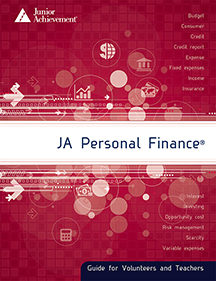
JA Personal Finance Program cover
Every JA program lists what elements of the Core curriculum it includes. I like it because I can easily see how I am targeting academic areas. Each program is divided into about 4-5 weeks. I follow the program as it is laid out because it is strategically put together.  I review the objectives and the extension learning for each unit and then I hit up all my ECC resources (you know, EVALS and ILSA) to make sure I am covering my ECC instruction.  I regularly take skills from EVALS and ILSA and infuse it right into my lesson plans. I also use my ECC Activity Worksheet (see my other post on it) to check my ECC instruction.
JA Ourselves Program Cover
I use JA programs for both my campus programs and my Outreach students (students attending their neighborhood schools).  I create quizzes for each unit and a final exam at the end of the program. (all on Google quizzes and Canvas). I LOVE JUNIOR ACHIEVEMENT!! Their lessons are thoughtful and laid out so well that it is not a headache for me to learn the material. I stick to the material from the lesson plan book and infuse A LOT of ECC before, during and after. 
Here are two examples of how I infuse ECC instruction with the JA programs: With It's My Business, I am doing an entrepreneurial program with my high school students. They are to do a group project on creating a Teen Club. I extended it that they had to do a formal presentation on PowerPoint/Google Slides. We paused the JA program and did some lessons on using AT for the presentation, what makes a good presentation, etc. (which still compliments the JA program). Another example is with my younger students with the JA Ourselves program, students earned "ECC Bucks" by completing simple tasks for various amounts around our school. Their "ECC Bucks" (real printed ECC money) was converted at the First National Bank of Robbin into real money. We headed to the grocery store and made a purchase (with instruction on needs and wants from the JA Ourselves program).
  JA More than Money
JA More than Money
I use JA as a class (in the ECC Lab  on campus) and as curriculum for short term programs (so much easier for my staff to follow). I do my best to stick to the grade levels that are established by the JA program. I modified the JA More than Money program for older students. It was originally written for younger students but the content was good and it set a foundation for the next program that we did. There are a fair amount of visual or not accessible materials but nothing that is impossible to work with. I retype all my JA lesson plans into Google Docs in large print because I always make a handout after each session for students to reference and study.  I do this because I keep my MacBook with me during my lessons. I take notes during the sessions because many times students will say things that help other students learn the concepts or expand the concept. I include that in the handout. 
My main accessibility resource is typing skills! I am grateful for awesome support staff that Braille items and set up things as needed. 

JA alumni are 30% more likely to have their bachelor's degree than the general population.
JA alumni are 30% more likely to have their bachelor's degree than the general population. 
Have I convinced you that Junior Achievement is a great resource for providing Expanded Core instruction? I have had a lot of success with it. They have programs on financial literacy, career education, leadership and a lot more.  Check out Junior Achievement in your area: https://www.juniorachievement.org/web/ja-usa/home

JA Career Success Program cover
If you use Junior Achievement, let me know! I'd love to collaborate with you. Junior Achievement Utah has been awesome to work with. Yay for another resource to provide Expanded Core instruction!!

Tuesday, August 8, 2017

Recreate with Recreation


Hi friends! I know it has been a long time since my last post but I have been crazy busy with summer programs. Whew, it has been a fun summer!! I wanted to share this post about getting out for some awesome recreation activities for students with vision impairments. It was another great year for Camp Abilities UT. This year I went with the theme of "passport to recreation" and each day we ventured to a new recreation activity. We spent time with the students discussing what recreation is, how they can do it and most importantly, WHY recreation is important for everyone! The picture below is  the front of the Camp Abilities UT shirt. 

It can be a challenge when you are first thinking about recreation activities that work well for students with very little to no vision. I have a few thoughts that I consider when I am planning recreation activities for my students--both my younger elementary students and my older middle to high school age students. First, I think of interest level. For example, are students interested in physical recreation activities, solitary recreation or low key (but interesting and fun) recreation? It is easy to just assume that recreation is going to be sports or physical activities. There are so many options (many that require minimal modifications or support) for youths with vision impairments! Gardening, cooking, theater, book groups, board games--and so many more are great options that are not physical.  The picture below is bowling with the black lights on. One of our students is getting a quick coach from one of our lead teachers as he throws the ball down the lane. 
Most of this post will discuss recreation activities that are community based. I am always looking for ways for students to be more active in their communities or future college campus. I think it is important for our kids to have connections that will help them be visible and active in their communities. 
Here are some fun recreation activities that our kids can do with friends and family with minimal modifications:
1. Bowling: bowling is great because you can have fun with any level of it. You can be on a league and be competitive or like many of us, just go and laugh at yourself for being a bad bowler! The main modification is that our kids just need to know where to line up to walk straight. We do bowling every year and all of the kids love it!! Our elementary age kids to high school have a great time bowling, listening to music and chatting with their friends. I usually spend half the time with the lights on but then we go for black light bowling. We have a wide range of visual needs and the black light doesn't really take away but usually adds to the fun for the students. 
The picture below is of four bowling balls in a square formation with a folded white cane on top of them. 

2. Ropes course: take a challenge on a high ropes course or a low ropes course! We took on an adventure course that was waaayyyy up high!! I usually like to do a quick preteach for my students that have no vision of just what the course layout is or footing sequences they will need to use (i.e. walking across a broken bridge).  The picture below is of the adventure ropes course with all the different routes you can travel on the course.

3. Stand up paddle boarding: SUP has become a huge hit in the Camp Abilities circuit and for many people in general! The only thing SUP requires is decent balance and a fun attitude. We go paddle boarding with KoliFit Fitness. They are a fantastic club that have taken us out on some fun adventures. The only equipment needed are the paddle boards, paddles and life jackets! Preteach moment: the kids get on the board on land (to check out the layout/size of the board) then onto shallow where they kneel initially to establish their balance. Fun for the whole family or out with friends! The picture below is two students on paddle boards. One student is kneeling with instructor behind them paddling and the other student is standing while paddling on their own. 

4. Wibit: You may be wondering what a wibit is...it's a giant water inflatable playground or obstacle island to play on. So many kids (and adults) have a blast playing on the wibit. Our local rec center has Wibit Wednesday where everyone can go play on the wibit at night. There are different wibits but the standard one is pictured below. It is long and stretches across the width or length of the pool. It's enormous and has a variety of different obstacles such as a slide and things to climb over or around. We do a quick preteach just to make sure students have an idea of where and how to travel the wibit. We sometimes put an adult staff member in the middle for verbal coaching. I let students go one by one or sometimes let them race depending on their comfort level. Our rec center Wibit Wednesday is every week throughout the year so even in the winter, we can still have pool fun!
5. Archery: Yes, archery! It may require a little bit more hands on learning but it is a very doable option for our kids. One quick modification is that we put a sound source to identify which location to aim. We have used a standard sound source from APH (available on quota funds) or wireless bluetooth speaker. Archery is a nice option because much like bowling, you can be on a team and compete or you can do it for fun and increase your skills. The picture below is of a young woman with a bow aiming at a target. 
6. Fencing: FENCING!! This was a new idea that was way fun! Special note: fencing does require a lot of technique to do competitive footwork and it does help to have a good fencing coach. However, for some fun recreation fencing was a great choice! Fencing is a sport that does not require vision. Whisper coaches can stand behind the athlete and provide coaching. We did a long preteach session to work on footwork (i.e. lunge, retreat, etc.). We did foil but we also considered epee. Low vision as well as our Braille reader students successfully participated fully. Lots of fun! The picture below is two students in fencing attire in a one on one competition. 

7. Horseback riding: This is a popular option and many of our students have done it before. It is a fun option for students of lots of ability levels. We were fortunate to have a young adult man who has no vision come and ride with us. There is more than just being on the horse for our students. We took time to brush the horses, feed them and just spent time with them. The picture below is a student riding a horse while an adult leads it. 
These 7 activities are fun recreation options that our kids can do with their families and friends. But don't think that there are just 7! There are so many options. Feel free to share more ideas with me. There are many advantages for recreation for everyone; not just people with vision impairments. It recreates us physically and emotionally. It is important for our kids and young adults as it is a designated area of the Expanded Core Curriculum!

Tuesday, June 20, 2017

Bringing Braille Literacy to Art with Shoe Design


I love our new library gal! She has immersed herself in the Expanded Core and has a ton of fun ideas for integrating it in meaningful ways. She had our transition class work their ECC skills with the Vans Custom Culture Contest. How fun?!

Because literacy makes it's mark in many ways - we ventured down the road of Art & Design in our Library Class. Together, the class conceptualized and designed four pairs of shoes for VANS Custom Culture contest. Each detail, theme, and material was discussed until a clear end product was brought to the table. Our library curriculum specialist helped execute the plan.  All four shoes are awaiting review to hopefully move on to the next round. Each student brought specific ideas to the table, and their outcome is fantastic--  from Braille on shoes to SW Local flavour - each is super unique.

I wanted to share this because I thought it was a great and super relevant way to relate the ECC for our transition age students. There were so many connections to different ECC skill areas with working on this contest. Plus, our shoes are on display at our school for everyone to see and to feel. Looks like the ECC is pretty fashionable, too!

Saturday, January 21, 2017

Transition Activity Calendar


Transition is a big topic for our youths with vision impairments. There are a lot of great new resources for education teams to work on transition. I want to share this awesome resource from the National Technical Assistance Center (NTAC) on Blindness and Vision Impairment. They have an amazing activity calendar that starts at middle school age. They have a link for an overview on the Expanded Core Curriculum (I love that!).  The activity calendar comes with a download version for Word and helpful information links throughout the calendar. Everything on the calendar is reader friendly so it is all easy to understand and use. 


I highly recommend this transition activity calendar to all families and education teams. There are so many great activities to help prepare for transition. Remember that transition does not mean employment only. Transition is about helping our youths move from education world to adulthood. I love that the transition activity calendar starts at middle school. It's a great place to start because waiting until 16 years old can be too late. There are so many experiences and skills that our youths need to have (and refine) to become successful, independent adults. 

Here's the link (bookmark it, share it, use it!):

Friday, April 22, 2016

DIY Career Academy

Looking for an interactive way to teach career education? Organize a career academy! This was part of my short term program a few months ago (other part was going to a trampoline park--I called it "jump into the career academy"). The idea came to me as a way of teaching about career education to my intermediate through high school grades. This was a hands-on experience that taught about different types of careers. Here are some of the careers we had: massage, cake decorating/baking, catering, culinary, therapy dog trainer and mechanics. 
I invited several community partners to be with us. Paul Mitchell (the school) came and ran our beauty/handsome school and taught our students about hygiene, styling your hair and how to look your best. I love how their instructors taught our kids! They had them feel their own hair and how to identify their own hair texture. They brought props to help with teaching braiding and products to learn how to use them.  I also invited a chef (we met him when I took my students to do hibachi),  a catering manager and massage therapists. I love bringing in community partners because of the mutual learning opportunities it provides. Not only do we learn about them but they learn how to work with people with vision impairments. It's such a win, win!! 


There are a few tricks of the trade that I want to share when planning your own career academy. 
1. Group students--organize them based on skill and maturity. This way the lesson can go at a good pace for all students. It is difficult for the teachers to teach scattered levels of ability in a short amount of time. I did have students that required a slower or more modified pace. They were in the same group in break out sessions and it helped them not feel rushed. 
2. Use related service and community partners as instructors--In culinary school I had our professional chef lead but used my OT students to provide support. The combined knowledge was a great skill set for teaching students skills.
3. Look for careers and not just jobs---There is a difference between a job and a career. The focus was to discuss careers. We discussed the type of training, assistive technology needs and realistic opportunities for people with vision impairments. Did you know that massage is a great opportunity for our kids? We discussed how some things that are recreational could be developed into something more (like becoming a therapy dog trainer).
4. KISS--Keep it simple stupid! The lessons were all designed to fit into a 50 minute window. The cooking recipe needed to be something doable but that also really taught skills at the same time. We made chicken fried rice. We used electric skillets, cooked chicken and incorporated frozen veggies and a rice cooker. 
5. Think outside of the box--I invited some mechanics to come and teach our kids about auto mechanics because usually our kids get passed by about learning about this topic.  Students learned how to identify all four tires, remove a flat tire (and fix it) and learn about what happens under the hood. Naturally there are things that may be beyond what our kids can do (simply because of the vision required) but we should still "fill them in" so they can have the understanding.  I also invited a cake decorator to come and teach our kids how to cake decorate. We brainstormed awesome ways for our kids (including those with no vision) how to make beautiful cakes. 


Students learned how to remove and fix a flat tire.

Our cake decorator instructor had the brilliant idea to use cookie cutters to teach design. Students placed the cookie cutter on their cake and used it to follow the "pattern". 


We learned all about massage and the different types of massage that can be offered. 


The day went by fast and crazy but all students had a great time. We were able to have a follow up Q&A with all our instructors and students were able to take home projects and tip sheets. 
Can you identify all the nine areas of the ECC that we covered today? We hit on all of them in a meaningful way. 

My follow up activity will be taking the students off campus to the actual locations. We have been fortunate enough to have our community partners stay on as mentors. Our catering manager has volunteered to be our catering mentor for our campus transition students that are now running their own catering business. Our mentor gives our students feedback and training. This is valuable because it develops their skill set and even provides an opportunity for some to apply to work at a Paradise Bakery or Panera in their catering department. I'll write up our part two as soon as we have it!