Showing posts with label For the whole family. Show all posts

Thursday, January 7, 2021

ECC Family Project: Grocery Shopping at a Food Bank


a graphic that says Expanded Core family project: grocery shopping for a food bank. Develop your child's Expanded Core skills and help the community together as a family.   For children of all abilities & for families of all types.

Then my teacher lightbulb switched on. I quickly saw all the ECC skills that could easily be infused into this idea and I knew that I had another family project for you. I have designed this idea for children of all abilities and families of all types. 
Here's another great Expanded Core family project: grocery shopping for a food bank. I'll be honest, this is another idea that comes straight from my own life. I read an article about our local food banks and there was a profile about the families who are receiving their support. I was quite struck by this as it reminded me that for most of my childhood I was a recipient of support. I decided to look up their needed items. I made a commitment that every time I go grocery shopping this year, I will pick items to support the local food bank. 

Part one--food bank research 
 As a family, look up your local food bank and learn about it. You can be as detailed as you need to meet your child where they are. Learn about what food banks are and what needs they have. I also encourage you to have your child call the food bank and conduct an interview. You will find out what specific needs your local bank has and it works conversation skills. 
  •  For moderate to typically developing students, have them use their tech skills and go online. Have them do the search on a device. I suggest a laptop so that everyone can read along with them (but you do what works for you!). 
  • For symbolic level students, use real life simple pictures of a building. Use simplified language ("This is a food bank."). You can go to the site https://www.remove.bg/ and it will remove the background of a visually chaotic picture for free!
Gather your information from your research. You can have your child be the speaker (they call the food bank),  the researcher (they go online) or the secretary (they write the details and the shopping list). You can assign these responsibilities out to members of your family (this teaches career education). 
Find the food bank address in your community. Have a quick discussion about the location of the food bank (after you researched the address). Consider these questions: is the food bank in a residential place? Is it in a strip mall? Go on a map and look at the street. Is it located on a busy street or main road or a side street? Does it have a stoplight controlled intersection. This quick discussion infuses orientation and mobility skills. 
A clipart of a woman in the grocery store holding a basket full of food

Part two-grocery shopping skills 
You have two options for this part. You can go to the grocery store or you can order groceries online. 
For both options, start with a grocery list. You can have this in Braille, large print or pictures. 
  • Option A:You can have a bit of fun with this part if you have the time. Start with your grocery list and play a type of the price is right with it. I do this a lot with students and it is super fun. Ask everyone to make a guess of how much items cost. This lets you know how much knowledge your child has about money skills. Then move onto grocery shopping. 
  • Option B: get right to grocery shopping. For in person grocery shopping, infuse AT skills by using an app such as Seeing AI or Be My Eyes. Divide your family into teams and work on the list together. Do not just put your child at the back of the cart and drag them around the store. Keep your child actively participating by giving them a specific task. For symbolic level students, give them pictures of what they are looking for. Let them put the item in the cart. 
For online shopping, turn JAWS on so everyone knows what's going on. Your child may be inexperienced with online shopping so be partners in this effort. **If you feel overwhelmed, do this: think of one thing your child CAN do for this and one thing you STOP doing for this. It will give you some direction.

For both in person or online shopping, the payment section is a good place for your child to be actively engaged. You can use paper bills--more ideal for students who have multiple impairments or teach about using a card. I try to make sure that my students have both the card reader experience at a self- checkout and with a cashier. Go at a dead time so you don't feel rushed. 

Last but never least, do the best you can! I've had so many grand ideas fail miserably when executed in real time. The focus is a family activity that helps the community. Pay attention to how your child does--are they way off with prices? Do they seem to not have strong internet skills? Do they not know much about grocery stores? Make some notes. Then call your teacher of students with vision impairments or OM instructor to work a plan to develop these skills. Pay attention to yourself--how much did you really help your child during these activities? Did you overpower during the lesson? All children can do something. Step back and let them do things before you jump in to help (easier said than done!). 
Can you imagine if just twenty families did this activity? We would help our local communities so much! 


Wednesday, April 15, 2020

Expanded Core Family Project

a graphic that gives the tips--text in post
Hi everyone, here is a quick and easy Expanded Core FAMILY activity! Make sunshine cards for patients in the hospital. I got this idea because it dawned on me that people weren't easily able to visit loved ones who are sick. The great thing about the ECC is that sooooo many ideas match ECC skills. Here's a fun and easy way that the whole family can do an activity together that also gives you a ton of ECC learning.
Below is the text from post: 
Get a pack of cards. Tip:  I used some blank cards from Dollar Tree (only 50 cents a card!)
ECC spotlight: 
talk about the price of cards, purpose of cards, location of cards in a store
Research thoughtful messages for cards. Type or print messages for cards.
ECC spotlight: 
use assistive tech to do research for messages. practice typing skills!
Call a local hospital to find out how you can drop off cards.
ECC spotlight: 
research the address of the hospital--discuss landmarks, find out if there is a bus route or careers at a hospital 

an image of lunchbox notes and stickers

We also bought some sticker since we knew that there were some kids who would receive this. We downloaded free lunchbox notes from Pinterest. Note: We put these items into a bag. Our original thought was to put them inside the cards but since we wanted every item to be safe for patients, we put them in a bag with a post-it for hospital staff to put inside cards after they were finished with their quarantine.

an image of a card with the message handwritten in it
 We took our research of get well notes and wrote them in the cards. The message says: Dear Friend, There are times that we need to know that people care about us. This is one of those times and I happen to be one of those people. Hope you feel better soon!
a card standing up with an envelop that says a sunshine card for you
 We know our parents have a lot going on with "the new normal".  Anyway that we can include things for the whole family can help a lot! I hope this gave you some fun ideas!

Thursday, May 23, 2019

Teach the Expanded Core Using the Play Impossible Gameball

Graphic that says Teach the Expanded Core Curriculum using the Play Impossible Gameball
I am so excited to share my new favorite Expanded Core activity: the Play Impossible Gameball! Have you tried it yet? I learned about it while at the Apple Store with an employee. I was instantly intrigued with its potential but worried about accessibility. There are so many fun new STEM ideas coming out but their apps are not accessible. Not the case with Play Impossible Gameball! 
There is a ton of potential with the gameball. I use it for STEM but of course can teach loads of other ECC skills. NOTE: take time to go through the app before you let students play with it. Consider all of the things you need to preteach. 

A photo of the Game possible screen app that shows the list of all the games.

The app allows you to play with just one player or in teams. You can play with one ball or two balls. The balls charge super fast! You can purchase them in a few places but I bought on Amazon. They are about $80 per ball. Kinda pricey but worth it! 
Check out general information on their site: https://www.playimpossible.com

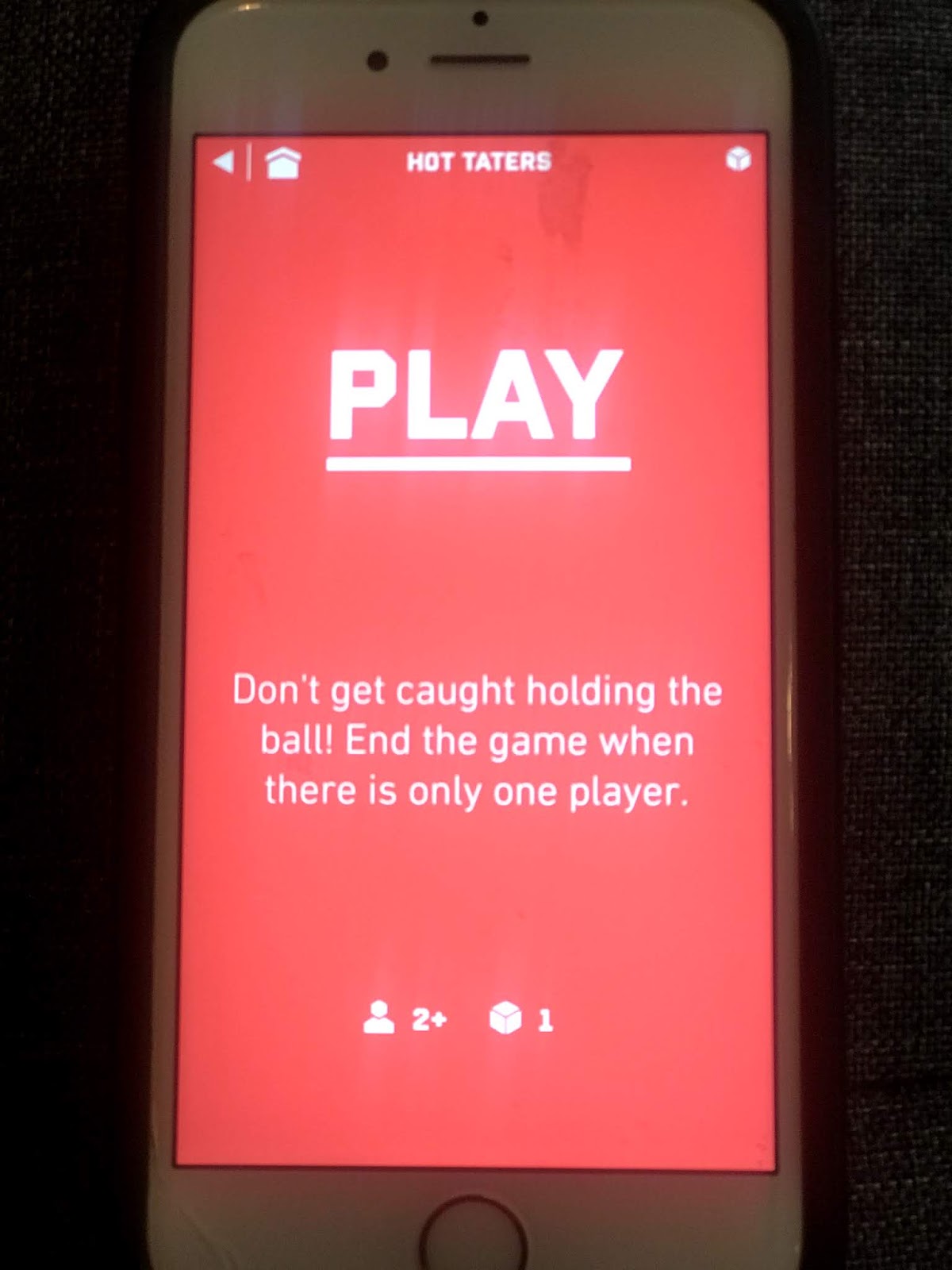
Screen of the app that says "play" with the directions for a game.
The ball is fun to play for just recreation and leisure skills. I tested out the app and its accessibility with our assistive technology teacher (who is completely blind) and our education tech guy. You can see how they did on Instagram. Follow me on 9MoreThanCore on Instagram to see the demo!

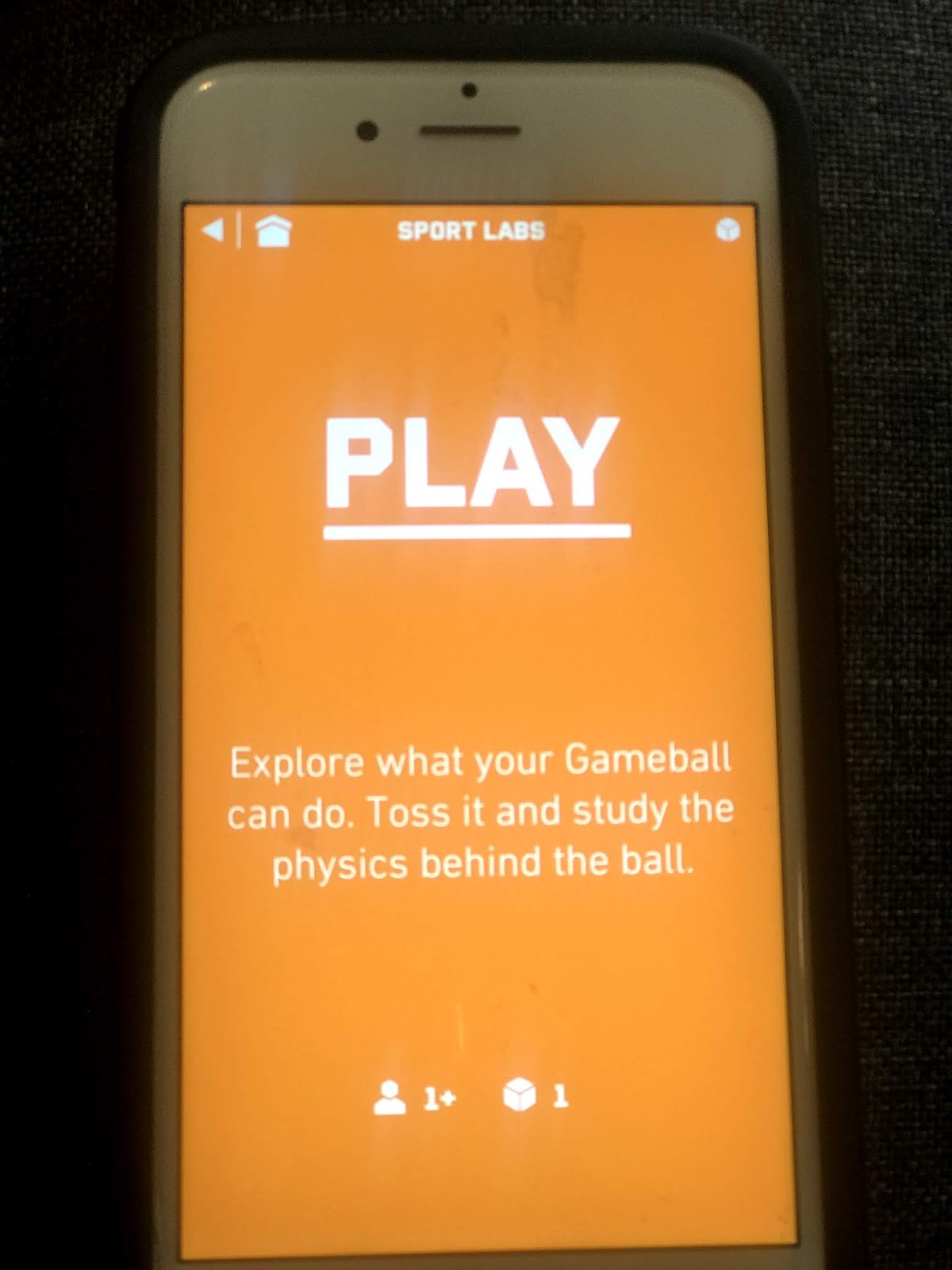
Screen of the app that says "play" with the directions for a game.
The app speaks about 80% of the information. It does not work with VoiceOver. Our AT guy, Quintin, who tested it with me was able to play almost completely independently. This is where you as the teacher or parent needs to play with the app first. You may need to teach or strengthen skills such as toss a ball in the air and catch the ball. 

screen of the app with the directions to select the metric unit you want to hear
I really like that students can play this with their friends and family without much effort. It allows our students to participate along side peers and have a lot of fun! There are some skills that I really recommend you preteach with students such as the tossing ones (if your student has no vision).  This is important because tossing ball is easy for sighted people but can be a real hiccup for our students.  Think about the social implications and needs for our students. 

screen of the app  from the sports labs activity with the stats of throwing, speed

Can you see all the areas and skills of the Expanded Core you can teach using the gameball? Recreation and leisure is definitely a win! I've even explored games that my students with multiple impairments can play with peers. Social skills is another main area. You can also infuse skills from self-determination, use of assistive technology and compensatory access skills. 

Friday, April 19, 2019

Spring & Easter ECC Activities


graphic that says spring & easter activities with the Expanded Core curriculum

Happy spring! Spring season bring holidays like Easter and a lot of fun opportunities for Expanded Core instruction. Check out some quick, fun and easy to do ECC spring activities. The bonus: you can do these for Easter, too!

Clearance sign that reads 2.50 above a bin of colorful pillows
a bunny stuffed animal sits on top of bright color pillows
an image of the gym floor with bright color medium and large different types of eggs
Let's start with Easter. One of the most difficult parts of traditional Easter activities is the egg hunt. Many people have adopted the beeping eggs or using balloons on strings. Those are great ideas and I have done them. The problem I ran into with the balloons is that it ended up being super windy and the balloons were blowing around everywhere--gah! The beeping eggs are nice but what do you do if you have students with hearing impairments, in wheelchairs or have under developed sound location skills? That's what I was thinking about this year when putting together our Spring Carnival. 
I was in Walmart gathering supplies when I saw a clearance bin with these colorful, soft and lightweight "egg looking" pillows---yes! They were only $2.50--score! I purchased a handful of these pillows. I knew that they would be perfect "eggs" for many of my students. They are easy to see, fun to touch and lightweight to hold. Yes! They were such a hit! The students used them in so many ways. I made sure that I bought a red one for some of my CVI students. I have many students who use gait trainers, walkers, etc. Check out my Instagram--9MoreThanCore to watch how some of my students used it. 
I also purchase "large print" eggs for $1 because they are easy to see.

an image of a wall with large bright color eggs with buckets

That wasn't the only egg hunt we had. Who say you have to have just one egg hunt when we have students of all different abilities and interests?! My kids have participated in lots of family egg hunts where each child is assigned a color or a sticker for their designated egg. I took that idea and put my ECC thinking cap on. Again, what is an egg hunt that my students can fully interact with? 

I assigned students based on small groups (small classroom sizes) a designated color egg. The big eggs were hung on walls for the hunt. Each classroom looks for multiple eggs of the same color that are mounted to the wall. Each classroom is designated a spring decoration (i.e. bee, flower, polka dot) and will decorate their eggs as they find them. The decorations were in buckets. Students matched their color to their egg and bucket. We used Braille labels on both buckets and eggs for literacy purposes and for students who have no vision.
a large green egg decorated with yellow chics mounted on the wall


a blue bucket with large print word "blue" and Braille label
a close up of the large eggs with braille label "yellow"

It worked out great! Students still did an egg hunt but we packed in a lot of other bonus skills. I considered popular IEP goals (scanning, matching, fine motor skills) and infused them into this and the other activities for meaningful instruction. They were also easy and inexpensive to make! I used poster board from Dollar Tree. I bought a white poster board and used a shiny wrapping paper for one color. They were nice and bright and easy to see. (We laminated them so we can use them again!). We used die cuts for decorations and painters tape for easy application. 
an image of the large colorful eggs taped to the wall

an image of the garden box with garden tools, flowers, etc. inside
Another fun activity was the gardening station. This was a mix of live plants, artificial plants/flowers and gardening tools. I headed to Walmart nursery clearance rack. I wanted crocus flowers because they are super fragrant. I also nabbed some oregano and parsley for their scent and textures. 
I found a great idea from Pinterest for the sensory play component. I picked up some black beans and filled some containers to have "dirt". Bright color artificial flowers provided great contrast. 

a close up of a bee decoration on the garden table.
a close up of the garden table with the flowers and activities

Target Dollar Spot had some great cheap finds! I purchased kids gardening gloves, gardening tools and fun rocks. They also had some fun carrots and veggies that were soft. You can easily open the seam and fill them with some weights to give them a little bit more weight for sensory feedback. (We had the same idea for the spring friends!).  Dollar Tree had these awesome carrot eggs. I filled them with different amounts of beans for shaker eggs. I found a super cute bee and lady bug decoration from At Home which added to the garden table.
a close up of the carrot eggs half filled with beans to make shaker eggs

a long decoration of a kite flying in the sky

I always love having a motor activity. I created some motor movements that all my students could do (wheelchairs, supported standers or independent standers). I also added numbers on dowels. Students selected a motor skill and a number. Our PE teacher ran the activity. 

a close up of the motor activity signs "run in place" "clap your hands"

a close up of the motor activities "wiggle your body" and "stomp your feet"

a close up of the dress up table
We had a spring dress up station with all kinds of fun items. Why? We had a parade! A parade infused some fun ECC skills. It was fun to watch students dress up with all kinds of decorations. We worked some fun social skills with smiling and waiving in our parade (very simple parade so we can focus on skills). 

a close up of the spring friends table with different characters on it.
 A lot of my students enjoy music so the spring friends table was just the table for them! I found these fun spring friends that dance and move. I also went to the baby section and found super soft bunnies and a large turtle. Again, you can open the seams and add some weight to provide more sensory feedback. 
a close up of the spring friends table with different characters on it.


a long spring decoration of raindrops on a duck and baby ducks

 You don't need to save these activities for Easter. These are spring activities you can do do throughout spring! Plus, buying these right after Easter gives you a nice savings to your wallet. 

an image of large different eggs


Wednesday, October 3, 2018

ECC PTA: A PTA for the Expanded Core!

Graphic that says ECC PTA on a chalkboard with school books.
Graphic that says ECC PTA on a chalkboard with school books. 

A PTA for the ECC? What? Why? How? YES! A PTA for the ECC!! I wish I had a better title but I don't because everyone knows that a PTA is and I can't risk too many unknowns in this new startup PTA.

Why an ECC PTA? Because we need more when it comes to partnership with providing Expanded Core instruction! Parents, family and home life are such an integral part of teaching the Expanded Core and it is one of our weakest areas. We need to find ways to strengthen it. There is so much authentic learning that happens outside of the classroom or an itinerant's janitor's "office". The Expanded Core is our key to living a thriving, meaningful life. We must find ways to connect our 9 areas to parents, the living room, the mall, friends, sports, restaurants---everywhere! We as teachers need more help. We need our parents and families to become true partners in ECC knowledge. Too much is on the line for our students. Our educational model is kinda working. We need to do better. We have to think outside the box on how we reach everyone--teachers, students and parents about the Expanded Core. Viola! We have an ECC PTA! The sole purpose is to provide blindness specific skills and intensive Expanded Core information, resources, training and build a community for our families. The unemployment/underemployment rate for people with vision impairments is still between 70-80%. We can change that statistic! The Expanded Core is a major player to change that statistic! We have to do things differently because too many good, smart, talented students with vision impairments grow up to sit at home and do almost nothing because they don't have the developed skills to live a thriving adult life.

Parents, I invite to take a good look at your child and see if they have the Expanded Core embedded in their lives. This does not mean that your child is perfect. I am a mom. My kids are not perfect. I do my best to teach them, encourage them, hold them accountable, etc. I know that my kids will not listen to me all the time and need others "in the village" to teach them. I tag others in at times to be the teaching piece I cannot be because I am the natural enemy. But the difference between my kids and your kids is that my kids have incidental learning. They can see things and learn by watching even when it is not intentional. All students with vision impairments need the ECC because it fills in the missing pieces when incidental learning isn't happening. It is not a reflection of poor parenting.

We opened our ECC PTA up to all of our divisions--from babies to post high and then we thought bigger. We opened it up to outside of Utah. We have some live sessions where we meet together but we also are creating an format where a lot of it is a digital community. We are recording webinars, newsletters, interactive pieces for sure but something that would allow parents to be involved no matter where they are.

Our ECC PTA doesn't have major time commitments. There is no fundraising or selling popcorn. It is established for the purpose of building a community for our families. It doesn't matter if your child is typically developing or has additional disabilities. The Expanded Core still applies to you no matter what!

The first thing we covered is to learn what the Expanded Core is and why it is critical that parents/guardians understand it. If you are new to my blog, that is the first thing you need to do. Read more posts on the ECC, email me for my tip sheets or do a Google on the Expanded Core Curriculum for students with vision impairments.

The second thing is to have a resource toolbox. My blog is just one tool. Your TVI is another excellent tool. I also suggest to invest in the book ECC Essentials from AFB Press (sold by APH on APH website or Amazon. I'll link it!). We will have a book club posting on this in a few weeks. I also facilitate social media on the ECC. Follow 9MoreThanCore on Facebook and Instagram (same name, different content).
A picture of the cover of the book ECC Essentials
Amazon link: https://www.amazon.com/ECC-Essentials-Teaching-Curriculum-Impairments/dp/0891284982

Shop APH Buy at Shop APH

Last but never least, join the ECC PTA! Click here for the registration link. 


Thursday, June 28, 2018

Teach the ECC at a Cowboy Dude Ranch!

 Yeehaw!! Howdy partners, let's teach the Expanded Core Curriculum out on the range!  We spent four days at the Rocking R Dude Ranch and got country strong on our ECC skills. Many programs look to do a variety of programs for our students. Going to a dude ranch was a first (but definitely not a last) for me! First, let me tell you that this was not designed to be any kind of luxury country getaway for students. I wanted students to dig in their boots to cowboy life with the ECC. It was a hit! Each day we did real chores (emphasis on the word "real"), spent time developing true global concept development and we had some serious fun! Students had to brush and prepare their horses, lead them to the arena and then learn how to ride. They got up early to watch and be part of the early morning care with the horses (watching them with the wranglers was awesome!!).

Student brushes a horse in the early morning.
Student brushes a horse in the early morning. 
As usual, I did receive a slightly panicked phone call from the owner when he saw that I was bringing a large group of students with vision impairments (everyone is always a little concerned...) but after our discussion, we knew that this was a good idea! Once we got there, I definitely knew it was a good idea!! I spent time reviewing activities and working accessibility needs prior to us arriving. My awesome staff spent the first day on pre-teaching alongside of the ranch staff. 
Female student sits on her horse listening to instruction from a dude ranch staff.
Female student sits on her horse listening to instruction from a dude ranch staff. 
Always remember to request (or bring) multiples of items so everyone gets lots of hands on to help with concept development. We had a ton of lassos, access to all the saddles, brushes, etc. so that true concept development could happen. Students didn't just touch one part of the animal. They learned about the food, its shelter, its weight, leisure activities, etc. Each group traded trivia questions that they came up with. 

Female student has roped a practice bull with her lasso while another student gets up close to a lasso with a staff member.
Female student has roped a practice bull with her lasso while another student gets up close to a lasso with a staff member. 
My FAVORITE thing to do is to help students see how the ECC is EVERYWHERE in their lives! Repeatedly throughout the day I worked with every group about how and why their activities were ECC skills. We have definitely gone past the easy point of simply stating "this is independent living skills because I am eating," (that's just our starting point...). We really dig in to why the cafeteria is a place for ILS skills, what about what they are doing, we dig into every single aspect so that they can see how it is SOOOO much more than independent living skills because we are eating. In fact, we always discover how so many areas of the ECC can be tied to one activity. It always opens their eyes to seeing how the ECC is truly all day, everyday. 
Students are in a circle for lawn games playing a game.
Students are in a circle for lawn games playing a game. 
Female student walks her horse into the arena while an adult staff leads on the other side.
I loved being at the dude ranch because it allowed all of my students to connect to the world in ways many of them don't get to experience. They had to problem solve while riding their horses. They had to work their teamwork skills as they were tubing down the river. They saw how important it is to care for an animal in real time. Of course many students have had animal interactions before. But this  opportunity allowed them to go bigger and bolder. They had plenty of time as no one was rushed through anything. We even had a real rodeo where all the students (and a very slow riding teacher named Robbin) did barrel racing and pole bending. 
Female student is hands on with goats with an adult staff member
I always love doing programs in the community for a variety of reasons. One, it helps the community see ability instead of disability with our students. They learn so much about accessibility and ability of people with vision impairments. I always offer to do free trainings, leave tactile maps, etc. so I leave the facility more accessible for the next blind person.  Two, the more I do things in the community, the more my students learn about what's available in the community. Three, I hope that it creates the opportunity for my students to return to the location with their family and friends outside of a program/camp. 

a female student is on a barrel to simulate riding a bull while other students pull attached cords at the corners of the barrel for the simulation
I could go on and on about our daily activities and how fun (and so educational) they were. Our evening activities matched the day with ECC fun! We had campfires (who doesn't love a good fire and camp songs?!) as well as learning how to line dance with a live country band! I secretly love line dancing because it is such a fun way to teach so many orientation and mobility skills! 
A group of female and male teenagers stand together with their life jackets on before going tubing in the river.
A group of female and male teenagers stand together with their life jackets on before going tubing in the river. 
The magic of camp can continue as long as we work hard to connect skills from camp to the real world at home. This is the part that often is a negative for camps and programs for our students: it's not in the student's real world. How do they keep their skills going? Where are they going to get a horse again? Well, the horse I can't help with but the skills part I can. Even though we were at a dude ranch, I kept focusing on the take away lessons and skills. We do this every camp and program. How can you take home what you are learning at camp? How can I empower parents to help keep the magic going? We have to close the loop and help students learn to generalize their skills to other environments. First I focus on the immediate environment but then I start leading to master in many environments. It's an important part of all our programs!
Get your cowboy boots on, grab your hat and head to a dude ranch for down on the range ECC instruction!!

Thursday, April 26, 2018

Use the Expanded Core to Teach Financial Literacy


Teach Financial Literacy Skills and Expanded Core Curriculum

A major part of independent living skills in the Expanded Core is money management. Money management skills are part of financial literacy. All youth need solid financial literacy skills for adulthood. We all know what happens when you don’t have good money skills! 

Many of our students receive ECC money management skills in terms of money identification skills. For example, folding money and using apps to identify it. However, there is so much more that our students need! Let’s incorporate the other ECC skills areas to help build a solid financial literacy skills foundation!

I recently started a distance education program with our school. The students do a majority of their learning at home and attend sessions over distance ed technology with me. They also come to campus for two full days of intensive hands on learning. 

I didn’t want to recreate the wheel with writing a financial literacy program for students. That can be super time consuming! I researched several programs and came away with a winner: Orange Owl Academy! There are several solid financial literacy programs but Orange Owl covered areas that many programs lacked. Orange Owl covered growth mindset, comparison of costs and had the most opportunities to implement ECC skills (beyond money management). 

Here’s an example of how I infused ECC: There is a section in the program where Teacher Taylor from Orange Owl asks students to think about their future home. I was able to implement transition skills, career ed and orientation and mobility into this whole session because we discussed transportation considerations, roommate living and access to work. 
Orange Owl has all videos that are accessible and a workbook. The workbook was a bit of a challenge for converting to .brf files (there were a lot of tables) but thanks to my faithful colleague, Becky who converted everything. We had a fully accessible workbook. 

We spent two full days on campus and that is where we targeted blindness specific skills. I also brought in some young adult blind mentors who helped lend some experience, tips and tricks for my students. 

The price for Orange Owl is $69.97. Our school paid for the subscription. The bonus is that our students and their family could do this together. We invited parents and siblings to do the course. The distance ed piece were weekly Zoom (like Skype) meetings. We did Orange Owl + the Expanded Core for 8 weeks. Each weeks has a theme that works with the Orange Owl curriculum. The Expanded Core piece is based on the EVALS assessment and the skills from the ECC. 

As the teacher, using the Orange Owl Academy curriculum helped me to focus on the ECC. I didn’t need to recreate the wheel with what financial skills to teach. It was a great partnering for me as I had students from all over the state participate in the program. 

Are you ready for the best news? 
I have spoken with Teacher Taylor from Orange Owl and we would love to invite more students to join! Families or schools will buy the subscription and can do the Expanded Core work with me. Please contact me, robbin.keating@gmail.com for more details. The Financial Academy can be done year round. I had some students who were able to get school credit for this. 

Here is the link for Orange Owl Academy to check out the program: https://www.orangeowlacademy.com


Monday, January 29, 2018

The Amazing Race ECC Community Based Instruction

Amazing Race

We had so much fun using The Amazing Race as our Expanded Core lesson! It was a great way to do community based instruction (CBI). You can get all kinds of ideas for The Amazing Race activities online. I love Pinterest so I started there but there are a lot of great online resources to help plan. This particular Amazing Race was for our students and siblings of kids with vision impairments. 
To make this work as an effective ECC CBI, think about your skills and your location. It should be a good challenge but doable (this allows you to focus on meaningful instruction). I selected a mall that was not very large and didn't have an overwhelming amount of pedestrian traffic (this allowed me to really work on OM skills). We also went to a main street that had a good amount of stores and Walmart. 

Of course one of our first challenges was for everyone to learn about the ECC! I bought a ton of those onesie PJ costumes and my staff dressed up  so we would be obvious for our students to find for challenges. That just made things fun and silly for all. 
In addition to the clues pictured in the post, students had to work on their ECC skills such as time management, compensatory skills, a lot of different OM skills (using landmarks, monoculars, directionality) and self-determination. The teams needed to work on communication and team building skills. Each staff member had a lesson plan so that we could provide direct instruction on all these ECC topics. Clues were printed in large print and a Braille copy. 
As always, be mindful of areas that should have some pre-or post teaching. If students have to figure out a ton of items, the main objectives of the lesson get lost. Each group had a (staff) coach who provided some 5 minute instruction as the students played the game. We also wanted to work in transportation skills but it  was a challenge to work in public transportation. We used our school bus and named it the "rendezvous point". The bus was parked somewhere along the route and students had to use their mapping skills to locate it. 
No Amazing Race challenge would be complete without a food challenge. Enter the simulator kits and Oreos! This was for everyone. I bought every kind of Oreo cookie and students had to identify the flavor. It was actually a fun way of doing sensory efficiency because we had to work the other senses for sure!
This could easily be a repeated activity and not just a stand alone one day program. You can even give skill level of beginner, intermediate and advanced. There is so much potential and I can't wait to do it again! It also doesn't even need to be just a blind school camp activity, families can do this as well! Just remember some of the points that I shared so that it is accessible and fun.