Showing posts with label Sports and Recreation. Show all posts

Thursday, July 25, 2019

Teach the ECC Using a Hoverboard

a graphic that says "teach the expanded core using a hoverboard"
Teach the Expanded Core using a.....hoverboard? YES! A hoverboard!! Why? How? Huh? Let me start at the beginning. I spent a few weeks mulling over the activities for STEM Camp. I already knew the theme (STEM Camp in the Old Pioneer West) but needed to do my research for other activities. I look for STEM activities that are popular with all kids. I want to keep our students looped in with what their peers are liking. I walked passed a hoverboard while buying some supplies and instantly made a U turn. I was going back for the hoverboard. I had an idea! 

a female student kneels down and checks out a hoverboard
I knew that it would be a total blast to teach my students how to use a hoverboard at STEM Camp. I loved this idea not just because I thought it would be cool but because my ECC lightbulb went off. There were so many things I could teach to build an awesome ECC experience! It was just hoverboards that I purchased, I rounded up different types of helmets, photos and pieces for location and got to work. 
the group of students sit with the teacher on the floor with their legs extended

Before we even got on the hoverboards, we needed to do some serious concept development, STEM instruction and pre-teaching. First, I set the stage and we discussed what everyone knew about hoverboards and all things related to them (helmets, locations, etc). 
Then we get to the STEM of it all. We talked about the parts of the hoverboard, the science of it and how they work. This was a bonus because I could teach STEM and the ECC at the same time. Students learned where to place their feet, how wide the foot pad sensors are and positioning. We sat on the floor and extended our legs to practice tipping our toes and working our heels. I bought different types of helmets on purpose to discuss the features, uses, etc. of the helmets. 

a female student wearing a fun helmet sits on the ground and checks out the hoverboard
Can you see all of the attention I'm giving to the details? Too many times I see teachers just pass the object to a students a move on. I purposely gave students a variety of helmets and bought different brands/types of hoverboards. I wanted them to get a rich experience and concept development. 

a female student sits on the ground and checks out the hoverboard
Can you see how many areas of the ECC we are hitting? I was so excited throughout our initial hoverboard lesson because it was like an ECC buffet! We hit lots of orientation and mobility--from spatial awareness to directionality and balance. (Once students got their balance, we did have them use their canes if they were a cane user). We even hit career education. How? We discussed the rules and earning your dues at the skate park. We also discussed what types of jobs you could have in the skate industry. 
students stand on the hoverboard with teachers standing in front of them holding their hands
Let me share some of my instruction progression on how we taught the hoverboard. Most important, use a chair to get on and off! The very first thing we did was just simply having students stand up, balance and then sit down. Once they could stand up and maintain their balance, I knew they were ready to move on. Students must wear a helmet at all times. 
Students then learned how to move forward and backwards. This was great because they learned a lot about body awareness and control. Each student had an adult staff in close proximity. I also had a teenager who had typical vision there to model, support and talk with students about her experience.

a female student moves forward on a hoverboard
It took all of the students about one full day of hoverboard practicing to grow to mastering it. Everyone, students with low vision to no vision were rocking their skills on the hoverboards! It was awesome to watch my students with no vision cruising along with their canes. They just adjusted their speed and coordinated with their canes to find their way up and down our hallways. 
a male teenager moves on the hoverboard and uses his cane
The next time you are looking for a fun ECC lesson, consider a lesson with a hoverboard! I bought my boards from Walmart. (I actually price matched walmart.com and got an even better price). I purposely bought different boards to compare and contrast. I even bought one with a bluetooth speaker built in!
a male teenager moves on the hoverboard and uses his cane
Another bonus: the confidence that all of our students gained by mastering the hoverboard! Yaaaassss! They learned the physics behind the hoverboard. They were fearless with gaining speed and fluidity. It was just an ECC party with students learning skills a lot of people probably don't think blind kids can do! It's not about what we see, it's about what we do! 


Thursday, May 23, 2019

Teach the Expanded Core Using the Play Impossible Gameball

Graphic that says Teach the Expanded Core Curriculum using the Play Impossible Gameball
I am so excited to share my new favorite Expanded Core activity: the Play Impossible Gameball! Have you tried it yet? I learned about it while at the Apple Store with an employee. I was instantly intrigued with its potential but worried about accessibility. There are so many fun new STEM ideas coming out but their apps are not accessible. Not the case with Play Impossible Gameball! 
There is a ton of potential with the gameball. I use it for STEM but of course can teach loads of other ECC skills. NOTE: take time to go through the app before you let students play with it. Consider all of the things you need to preteach. 

A photo of the Game possible screen app that shows the list of all the games.

The app allows you to play with just one player or in teams. You can play with one ball or two balls. The balls charge super fast! You can purchase them in a few places but I bought on Amazon. They are about $80 per ball. Kinda pricey but worth it! 
Check out general information on their site: https://www.playimpossible.com

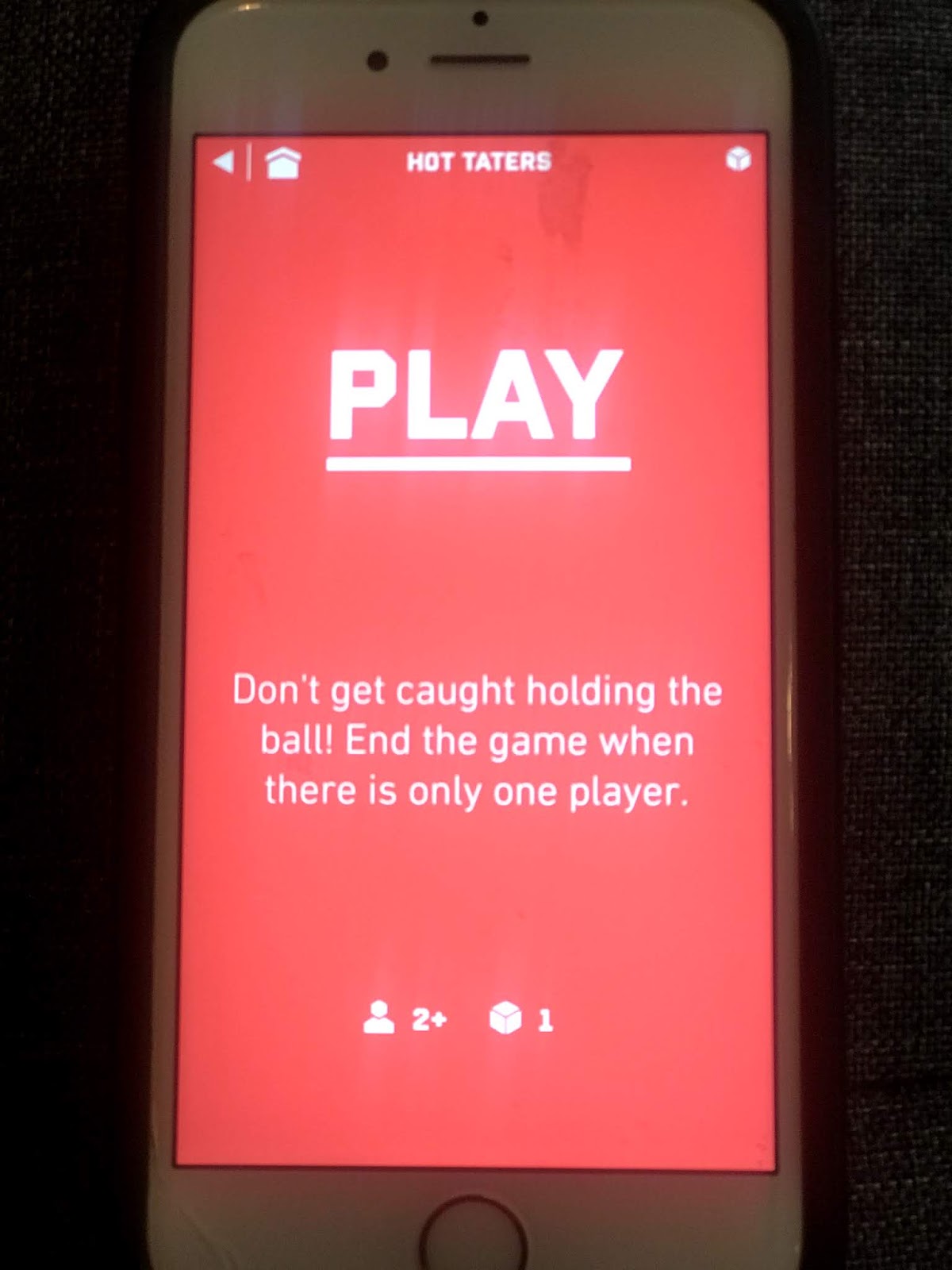
Screen of the app that says "play" with the directions for a game.
The ball is fun to play for just recreation and leisure skills. I tested out the app and its accessibility with our assistive technology teacher (who is completely blind) and our education tech guy. You can see how they did on Instagram. Follow me on 9MoreThanCore on Instagram to see the demo!

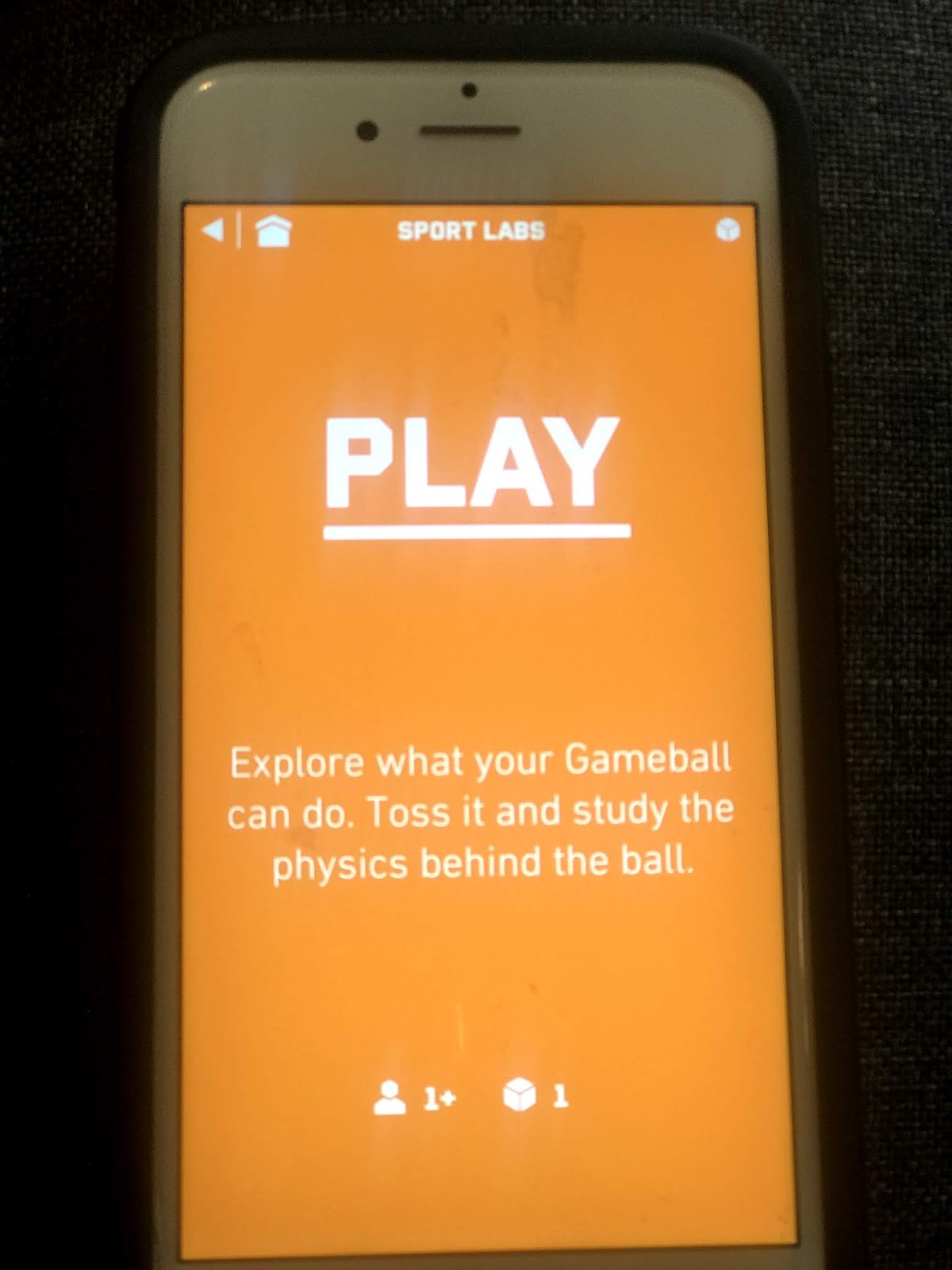
Screen of the app that says "play" with the directions for a game.
The app speaks about 80% of the information. It does not work with VoiceOver. Our AT guy, Quintin, who tested it with me was able to play almost completely independently. This is where you as the teacher or parent needs to play with the app first. You may need to teach or strengthen skills such as toss a ball in the air and catch the ball. 

screen of the app with the directions to select the metric unit you want to hear
I really like that students can play this with their friends and family without much effort. It allows our students to participate along side peers and have a lot of fun! There are some skills that I really recommend you preteach with students such as the tossing ones (if your student has no vision).  This is important because tossing ball is easy for sighted people but can be a real hiccup for our students.  Think about the social implications and needs for our students. 

screen of the app  from the sports labs activity with the stats of throwing, speed

Can you see all the areas and skills of the Expanded Core you can teach using the gameball? Recreation and leisure is definitely a win! I've even explored games that my students with multiple impairments can play with peers. Social skills is another main area. You can also infuse skills from self-determination, use of assistive technology and compensatory access skills. 

Thursday, June 28, 2018

Teach the ECC at a Cowboy Dude Ranch!

 Yeehaw!! Howdy partners, let's teach the Expanded Core Curriculum out on the range!  We spent four days at the Rocking R Dude Ranch and got country strong on our ECC skills. Many programs look to do a variety of programs for our students. Going to a dude ranch was a first (but definitely not a last) for me! First, let me tell you that this was not designed to be any kind of luxury country getaway for students. I wanted students to dig in their boots to cowboy life with the ECC. It was a hit! Each day we did real chores (emphasis on the word "real"), spent time developing true global concept development and we had some serious fun! Students had to brush and prepare their horses, lead them to the arena and then learn how to ride. They got up early to watch and be part of the early morning care with the horses (watching them with the wranglers was awesome!!).

Student brushes a horse in the early morning.
Student brushes a horse in the early morning. 
As usual, I did receive a slightly panicked phone call from the owner when he saw that I was bringing a large group of students with vision impairments (everyone is always a little concerned...) but after our discussion, we knew that this was a good idea! Once we got there, I definitely knew it was a good idea!! I spent time reviewing activities and working accessibility needs prior to us arriving. My awesome staff spent the first day on pre-teaching alongside of the ranch staff. 
Female student sits on her horse listening to instruction from a dude ranch staff.
Female student sits on her horse listening to instruction from a dude ranch staff. 
Always remember to request (or bring) multiples of items so everyone gets lots of hands on to help with concept development. We had a ton of lassos, access to all the saddles, brushes, etc. so that true concept development could happen. Students didn't just touch one part of the animal. They learned about the food, its shelter, its weight, leisure activities, etc. Each group traded trivia questions that they came up with. 

Female student has roped a practice bull with her lasso while another student gets up close to a lasso with a staff member.
Female student has roped a practice bull with her lasso while another student gets up close to a lasso with a staff member. 
My FAVORITE thing to do is to help students see how the ECC is EVERYWHERE in their lives! Repeatedly throughout the day I worked with every group about how and why their activities were ECC skills. We have definitely gone past the easy point of simply stating "this is independent living skills because I am eating," (that's just our starting point...). We really dig in to why the cafeteria is a place for ILS skills, what about what they are doing, we dig into every single aspect so that they can see how it is SOOOO much more than independent living skills because we are eating. In fact, we always discover how so many areas of the ECC can be tied to one activity. It always opens their eyes to seeing how the ECC is truly all day, everyday. 
Students are in a circle for lawn games playing a game.
Students are in a circle for lawn games playing a game. 
Female student walks her horse into the arena while an adult staff leads on the other side.
I loved being at the dude ranch because it allowed all of my students to connect to the world in ways many of them don't get to experience. They had to problem solve while riding their horses. They had to work their teamwork skills as they were tubing down the river. They saw how important it is to care for an animal in real time. Of course many students have had animal interactions before. But this  opportunity allowed them to go bigger and bolder. They had plenty of time as no one was rushed through anything. We even had a real rodeo where all the students (and a very slow riding teacher named Robbin) did barrel racing and pole bending. 
Female student is hands on with goats with an adult staff member
I always love doing programs in the community for a variety of reasons. One, it helps the community see ability instead of disability with our students. They learn so much about accessibility and ability of people with vision impairments. I always offer to do free trainings, leave tactile maps, etc. so I leave the facility more accessible for the next blind person.  Two, the more I do things in the community, the more my students learn about what's available in the community. Three, I hope that it creates the opportunity for my students to return to the location with their family and friends outside of a program/camp. 

a female student is on a barrel to simulate riding a bull while other students pull attached cords at the corners of the barrel for the simulation
I could go on and on about our daily activities and how fun (and so educational) they were. Our evening activities matched the day with ECC fun! We had campfires (who doesn't love a good fire and camp songs?!) as well as learning how to line dance with a live country band! I secretly love line dancing because it is such a fun way to teach so many orientation and mobility skills! 
A group of female and male teenagers stand together with their life jackets on before going tubing in the river.
A group of female and male teenagers stand together with their life jackets on before going tubing in the river. 
The magic of camp can continue as long as we work hard to connect skills from camp to the real world at home. This is the part that often is a negative for camps and programs for our students: it's not in the student's real world. How do they keep their skills going? Where are they going to get a horse again? Well, the horse I can't help with but the skills part I can. Even though we were at a dude ranch, I kept focusing on the take away lessons and skills. We do this every camp and program. How can you take home what you are learning at camp? How can I empower parents to help keep the magic going? We have to close the loop and help students learn to generalize their skills to other environments. First I focus on the immediate environment but then I start leading to master in many environments. It's an important part of all our programs!
Get your cowboy boots on, grab your hat and head to a dude ranch for down on the range ECC instruction!!

Friday, December 29, 2017

Teach the Expanded Core at a Ninja Gym!

Teaching the Expanded Core Curriculum at Ninja Warrior Gym
Hi friends, you know I like to make the Expanded Core Curriculum as relevant and meaningful as possible for our kiddos so check out this community based instruction (CBI) lesson at a ninja gym! First, it is important to note that I didn't just show up at the ninja gym and to just play and hang out. The ninja gym was part of my short term program, Ninja Jam (a ninja twist on my annual December Jingle Jam). It was such an awesome way of teaching ECC skills! 
Before we headed to the ninja gym, we spent the morning discussing life obstacles. All of the students were divided up according to age. I write lesson plans for my staff so they can lead discussions with important talking points. I also made sure we touched on growth mindset as part of learning how to crush life obstacles. I love growth mindset for my students and my own kids. There is so much we can use from growth mindset as part of ECC instruction. 
Each student completed a worksheet (see picture below). Note: I made sure the font was a size that all my low vision students could see (some had theirs on 11x17 papers and we used 20/20 pens). We made Braille worksheets for our Braille readers (using simple peel & stick Braille labels and old school Perkins Braille writer). 

Here's a snapshot of my lesson plan discussion for my staff:
Can you see how we are working Expanded Core skills for this activity? We are hitting all the areas in this small group activity. 
Next we headed to the Ninja Warehouse in Ogden for an awesome ninja session! This took some planning and pre-teaching on my part. I went to the gym a few times before and thought about how I could take obstacles that were up in the air and make it meaningful. Thanks to the ninja coaches who gave me lots of help! My best tool for teaching about things up in the air: a white cane!

 We divided students into small groups and different stations. Students with no vision had a guide and we did tactile modeling of body positions.
The black & red colors were a bit tricky for some students because there was so much black & red but we managed well. Below is a picture of one of my students who has some vision (but is Braille reader) using her cane to see how high up the Devil Steps obstacle went.
 Then my daughter who was this student's guide runner in a lot of things we have done over the past year went side by side to show where to grab. Another note: I like to use peers whenever possible with typically developing students. I think there is too much of a stereotype that our kids always need an adult with them. I use peers as much as possible.

 We used A LOT of tactile modeling for body positions. We were very lucky to have Karson Voiles (owner of the ninja gym and an accomplished American Ninja Warrior come in and coach us.) He held a lot of positions over and over so students could feel how to position their body (major kudos to Karson because he had to do it a lot!).
 The ECC instruction covered everything from what clothes and shoes you should wear (independent living skills) to concept development (compensatory skills). It was a full ECC day of learning!

We had students with low vision, no vision and deafblindness attend our Ninja Jam. Check out my Instagram (9 More Than Core) to see video and more pictures of my students crushing obstacles. 
I'm not gonna lie. Some obstacles were a challenge for students with no vision such as the Warped Wall. Luckily there were kid sized walls that helped with the concept development. We had students feel the wall (to get the idea of the curvature) and the ledge. Then we did practice runs where I ran along side my students with our hands touching. I yelled "grab it" when we got up to the ledge. It only took these awesome students one practice run and they were climbing the wall like a champ! All of them pulled themselves up and onto the top. I did something similar on the larger version. It just goes to show you that it really isn't about what they see, it's about what they do!

Sample of Expanded Core Skills Covered:
Compensatory: concept development, reading & writing, spatial concepts, speaking & listening, organization
Orientation & Mobility: travel, body awareness, spatial concepts, locomotor skills, requesting/declining assistance
Social Interaction Skills: interpersonal communication with others and instructors; learning socially relevant conversation (why are so many people interested in American Ninja Warrior or parkour training)
Independent Living Skills: discussion of appropriate clothing and shoes for the gym, time management, organization
Recreation & Leisure: learning about obstacles, skills and activities (we had one very low vision student a student at the gym already!). 
Career Education: what jobs are available in this type of area; how to become a coach (and discussion about what make a good coach), following rules, waiting in line
Assistive Technology: We actually had an APPetizer party as part of Ninja Jam where we learned about different apps and how they can help in real life. Students took pictures of obstacles on their phones and magnified them so we could look at details that were far away.
Sensory Efficiency: We definitely had to rely on all remaining senses and vision to be engaged in the activities at the ninja gym.
Self-Determination: There were so many SD opportunities! Students made choices about what they wanted to do, developed preferences, learned about skills and talents for different skills and obstacles, requested assistance or identified where they needed it, made a plan of action (life obstacles). 

Tuesday, August 8, 2017

Recreate with Recreation


Hi friends! I know it has been a long time since my last post but I have been crazy busy with summer programs. Whew, it has been a fun summer!! I wanted to share this post about getting out for some awesome recreation activities for students with vision impairments. It was another great year for Camp Abilities UT. This year I went with the theme of "passport to recreation" and each day we ventured to a new recreation activity. We spent time with the students discussing what recreation is, how they can do it and most importantly, WHY recreation is important for everyone! The picture below is  the front of the Camp Abilities UT shirt. 

It can be a challenge when you are first thinking about recreation activities that work well for students with very little to no vision. I have a few thoughts that I consider when I am planning recreation activities for my students--both my younger elementary students and my older middle to high school age students. First, I think of interest level. For example, are students interested in physical recreation activities, solitary recreation or low key (but interesting and fun) recreation? It is easy to just assume that recreation is going to be sports or physical activities. There are so many options (many that require minimal modifications or support) for youths with vision impairments! Gardening, cooking, theater, book groups, board games--and so many more are great options that are not physical.  The picture below is bowling with the black lights on. One of our students is getting a quick coach from one of our lead teachers as he throws the ball down the lane. 
Most of this post will discuss recreation activities that are community based. I am always looking for ways for students to be more active in their communities or future college campus. I think it is important for our kids to have connections that will help them be visible and active in their communities. 
Here are some fun recreation activities that our kids can do with friends and family with minimal modifications:
1. Bowling: bowling is great because you can have fun with any level of it. You can be on a league and be competitive or like many of us, just go and laugh at yourself for being a bad bowler! The main modification is that our kids just need to know where to line up to walk straight. We do bowling every year and all of the kids love it!! Our elementary age kids to high school have a great time bowling, listening to music and chatting with their friends. I usually spend half the time with the lights on but then we go for black light bowling. We have a wide range of visual needs and the black light doesn't really take away but usually adds to the fun for the students. 
The picture below is of four bowling balls in a square formation with a folded white cane on top of them. 

2. Ropes course: take a challenge on a high ropes course or a low ropes course! We took on an adventure course that was waaayyyy up high!! I usually like to do a quick preteach for my students that have no vision of just what the course layout is or footing sequences they will need to use (i.e. walking across a broken bridge).  The picture below is of the adventure ropes course with all the different routes you can travel on the course.

3. Stand up paddle boarding: SUP has become a huge hit in the Camp Abilities circuit and for many people in general! The only thing SUP requires is decent balance and a fun attitude. We go paddle boarding with KoliFit Fitness. They are a fantastic club that have taken us out on some fun adventures. The only equipment needed are the paddle boards, paddles and life jackets! Preteach moment: the kids get on the board on land (to check out the layout/size of the board) then onto shallow where they kneel initially to establish their balance. Fun for the whole family or out with friends! The picture below is two students on paddle boards. One student is kneeling with instructor behind them paddling and the other student is standing while paddling on their own. 

4. Wibit: You may be wondering what a wibit is...it's a giant water inflatable playground or obstacle island to play on. So many kids (and adults) have a blast playing on the wibit. Our local rec center has Wibit Wednesday where everyone can go play on the wibit at night. There are different wibits but the standard one is pictured below. It is long and stretches across the width or length of the pool. It's enormous and has a variety of different obstacles such as a slide and things to climb over or around. We do a quick preteach just to make sure students have an idea of where and how to travel the wibit. We sometimes put an adult staff member in the middle for verbal coaching. I let students go one by one or sometimes let them race depending on their comfort level. Our rec center Wibit Wednesday is every week throughout the year so even in the winter, we can still have pool fun!
5. Archery: Yes, archery! It may require a little bit more hands on learning but it is a very doable option for our kids. One quick modification is that we put a sound source to identify which location to aim. We have used a standard sound source from APH (available on quota funds) or wireless bluetooth speaker. Archery is a nice option because much like bowling, you can be on a team and compete or you can do it for fun and increase your skills. The picture below is of a young woman with a bow aiming at a target. 
6. Fencing: FENCING!! This was a new idea that was way fun! Special note: fencing does require a lot of technique to do competitive footwork and it does help to have a good fencing coach. However, for some fun recreation fencing was a great choice! Fencing is a sport that does not require vision. Whisper coaches can stand behind the athlete and provide coaching. We did a long preteach session to work on footwork (i.e. lunge, retreat, etc.). We did foil but we also considered epee. Low vision as well as our Braille reader students successfully participated fully. Lots of fun! The picture below is two students in fencing attire in a one on one competition. 

7. Horseback riding: This is a popular option and many of our students have done it before. It is a fun option for students of lots of ability levels. We were fortunate to have a young adult man who has no vision come and ride with us. There is more than just being on the horse for our students. We took time to brush the horses, feed them and just spent time with them. The picture below is a student riding a horse while an adult leads it. 
These 7 activities are fun recreation options that our kids can do with their families and friends. But don't think that there are just 7! There are so many options. Feel free to share more ideas with me. There are many advantages for recreation for everyone; not just people with vision impairments. It recreates us physically and emotionally. It is important for our kids and young adults as it is a designated area of the Expanded Core Curriculum!

Sunday, July 9, 2017

Use Board Games to Teach the Expanded Core Curriculum


Looking for another fun way to implement the Expanded Core Curriculum at home this summer? How about some fun board game play! Say what?! Yep! Here are three board games that pack a fun ECC punch.
It's just not recreation leisure ECC area that board games cover. Many students with vision impairments especially those with more significant vision loss struggle with asking meaningful questions to obtain information. It's a true skill for our kids and youth to learn how to discern useful information and know how to get it. This is something I have been working on teaching my students for forever. In fact, one of my favorite OM instructor and I used to joke that we were going to start a question camp just to work on the art of asking good questions to get meaningful information!

This year at my Theater Camp I figured out a way to work on this area. I got some board games that focus on questions, listening, information, etc. that were actually fun to play. The first of my favorite games is Hedbanz. This is a great game for question asking that also packs a lot of other ECC areas.


The first thing I do is make sure all of the students are familiar with the rules and the "how to" of the game. The pictures I've posted are of the game brand new. Next, I whip out some Brailleables, any kind of fave Braille labels or I just Braille right onto the card (I would do this if you are just buying for home. I use labels because I use them at camps over and over). I also discuss some of the objects on the card as a pre-teach for concept development. 

Note: I secretly keep tabs of cards that students did not know anything about so I can later get those items and teach about it. Most times the kids know the cards but I always have my teacher brain on....
Then I just play the game! There are a few versions like Disney Hedbanz and all are a lot of fun. They do give you sample question cards to help you ask good questions. I usually Braille those, too. This game is great for working ECC skills because you really can touch on almost all ECC areas. It's also just a fun social game. I play it with all ages of students to be honest because we all just have a great time. Sometimes we race to see how fast we can figure out the cards with older students or do something new and silly for them. 


Apples to Apples is another fun game that teaches ECC areas. I prefer to play the Junior version with most of my younger students. It takes awhile to get the Braille on but that, too, is an ECC teaching moment since I ask my students to help Braille them. We have a lot of fun with the combinations and again we discuss different social items related. There isn't too much for the question asking in this game but it still teaches a lot of meaningful ECC skills. 


What is IT? is an APH game that is similar to Hedbanz. I originally didn't know about this game until it was offered to me as we were cleaning out old items. What a diamond of a find! Check out the example I snapped a picture of below:
They provide tons of items and some helpful tips for teaching how to play the game. Once I see that students get the hang of it, I challenge them to come up with their own items by topic. For example, things you would find in a kitchen. See how I am teaching ECC here? I'm working some good independent living skills in a fun way. Then I can extend the lesson by asking students to find the actual items in the kitchen or discuss where to buy them/use them for different types of meals. 

It's been really fun to keep playing these board games and linking them to the ECC. I also love playing Left Center Right (see old posts for it) and other group games like Hottest (see older posts) that completely incorporate Expanded Core skills. 

If you aren't sure how you are implementing ECC while playing, break down the nine areas and see how they fit. I'll be sharing my favorite ECC worksheets that I use with my teachers to help them implement the ECC later.